
 Help Center



For drivers under the age of 25, additional fees and/or restrictions may apply.
For information and assistance in completing your reservation, please call:
1-866-921-7925We're unable to find your location.


Executive Members receive an annual 2% Reward, up to $1,250, on qualified Costco Travel purchases

Member Exclusive: Digital Costco Shop Card with every Princess Cruises® sailing†

Note: Cruise itineraries are subject to change. Please verify ports and times directly with the cruise line.

Though physically small, Singapore is an economic giant. It has been Southeast Asia's most modern city for over a century. The city blends Malay, Chinese, Arab, Indian, and English cultures and religions. Its unique ethnic tapestry affords visitors a wide array of sightseeing and culinary opportunities from which to choose. A full calendar of traditional festivals and holidays celebrated throughout the year adds to its cultural appeal. In addition, Singapore offers luxury hotels, delectable cuisine,e, and great shopping! Located at the tip of the Malay Peninsula, Singapore's tropical climate welcomes both leisure and business travelers year-round. The island republic's excellent infrastructure enables visitors to enjoy its many sites and attractions in a safe, clean, and green environment. Award-winning Changi Airport provides air links to major cities around the world. The train and subway systems are clean, fast,t and efficient. In addition, its state-of-the-art cruise terminal has established Singapore as one of the premier cruising centers in Southeast Asia and an exciting port of call on any Asian cruise itinerary. In the city, there is no need for a car. Public transportation is excellent and walking is a good way to explore the city. All major attractions are also accessible by tour bus. Since the city is only 60 miles (100k) from the equator, the tropical temperatures do not vary much. Rainfall is fairly evenly distributed throughout the year. No matter when you choose to visit, warm weather will be abundantly available. The visitor is struck immediately by Singapore's abundance of parks, nature reserves, and lush, tropical greenery. Singapore's progress over the past three decades has been remarkable, yet the island has not been overwhelmed by development. Visitors will discover a wealth of historical treasures from the past, in the beauty of older buildings, values, and traditions that have survived in the face of profound social and geographical change. Lacking any noteworthy natural resources, Singapore's early prosperity was based on a vigorous free trade policy, put in place in 1819 when Sir Stamford Raffles first established it as a British trading post. Later, mass industrialization bolstered the economy, and today the state boasts the world's second busiest port after Rotterdam, minimal unemployment, and a super-efficient infrastructure. Almost the entire population lives in upscale new apartments, and the average per capita income is over US$12,000. Singapore is a clean, safe place to visit, its amenities are second to none and its public places are smoke-free and hygienic. Forming the core of downtown Singapore is the Colonial District. Each surrounding enclave has its distinct flavor, from the aromatic spice stores of Little India to the tumbledown backstreets of Chinatown, where it is still possible to find calligraphers and fortune tellers, or the Arab Quarter, whose cluttered stores sell fine cloths and silks. North of the city, are two nature preserves, Bukit Timah and the Central Catchment Area, along with the splendid Singapore Zoological Gardens. The East Coast features good seafood restaurants set on long stretches of sandy beach. In addition, there are over fifty islands and islets within Singaporean waters, all of which can be reached with varying degrees of ease. Day trips are popular to Sentosa, the island amusement arcade which is linked to the south coast by a short causeway and cable car. Music, theater, and nightlife: all are abundant in this remarkable city. Singapore used to be considered a "stopover" on the way to larger Asian cities. This is no longer true! Visitors seek out Singapore for business and finance and also for a fascinating and satisfying vacation for the whole family. Strategically located at the southern tip of the Malay Peninsula sixty miles from the equator, Singapore has for centuries been a crossroads between East and West. Chinese traders en route to India had navigated its waters from at least the 5th century. In the 14th century, it was part of the powerful Vijayan Empire and was known as Temasek or Sea Town. Legend has it that it was renamed Singa Pura or Lion City after a visiting Sumatran prince saw an animal he mistook for a lion, an animal considered a good omen. Modern Singapore came into being in 1819 when Sir Stamford Raffles claimed what was then a small fishing village as a regional base for the East India Company. The island's natural harbor and location made it an ideal site for a trading post serving British trade interests between China, the Malay world, and India. Singapore flourished as its free trade policy attracted merchants and residents from all over the world. Raffles initiated a town plan which included leveling one hill to form a new commercial district (now Raffles Place) and constructing government buildings around another hill (now called Fort Canning Hill). The British plan also involved separating the population according to ethnic categories with Europeans, Indians, Chinese,e, and Malays each living and working in the distinct quarters of the city. Revenues soared in the ensuing years from the production of opium and rubber. Millionaires were made overnight. Immigration rose steadily. The island became Britain's strategic defense base in the Far East but fell to the Japanese in 1942. After the world war ended in 1945, Singapore became a crown colony. It gained self-governing status in 1959 and independence in 1965 when it became part of the new state of Malaysia which united Malaya with Singapore, Sabah, and Sarawak. The alliance did not last. Singapore was used to being on its own, and within two years the island set up its stable government and became known as the Republic of Singapore. Under Prime Minister Lee Kuan Yew's leadership, Singapore continued to strengthen its infrastructure and its industrial base. Housing and urban renovation kept pace with population growth. The areas of health and education are strong. Singapore's leaders have also brought order and progress through strict regulation of social behavior. Smoking in public was banned, as was gum chewing. High economic growth rates have supported political stability. Singapore is the world's second busiest seaport and has an airport served by over 50 major airlines. It has state-of-the-art communication and mass transit systems. It is Asia's premier center for finance and business and the world's third-largest oil refining center. Over 7 million visit the tiny island every year.
Phuket, a rainforested, mountainous island in the Andaman Sea, has some of Thailand’s most popular beaches, mostly situated along the clear waters of the western shore. The island is home to many high-end seaside resorts, spas, and restaurants. Phuket City, the capital, has old shophouses and busy markets. Patong, the main resort town, has many nightclubs, bars and discos.
Langkawi Island, or as the local language says Pulau Langkawi, is blessed with many natural features: stunning waterfalls, tropical jungles and pristine white sandy beaches to name just a few. The island has some nature highlights, which include the summits of Gunung Raya and Gunung Machinchang, the Field of Echoes, the Lake of the Pregnant Maiden and several waterfalls, the Seven Wells Waterfall being the most famous. Lang-Kawi Island lies at the northern tip of Peninsular Malaysia, about 30 kilometres from the nearest mainland town. The island is steeped in legend and mystery and most of the attractions are the physical reminders of these legends, like Mahsuri’s Tomb in the centre of the island and the Field of Burnt Rice. Another unique place in Langkawi is the Cave of Legends, located on the Cape of the Casuarinas, where verses of the Koran are inscribed on the walls. Other points of interest include the Langkawi Crocodile Farm, Air Hangat Village, which provides an insight into traditional Malay culture and Kampung Tanamas, a local handicraft village. The main town in Langkawi is Kuah, where visitors will find the most important facilities, like money-changers, shopping centres, car hire, the post office and tourist information.
George Town is the colorful, multicultural capital of the Malaysian island of Penang. Once an important Straits of Malacca trading hub, the city is known for its British colonial buildings, Chinese shophouses, and mosques. Beyond the old town, George Town is a modern city with skyscrapers and shopping malls. Verdant Penang Hill, with hiking and a funicular railway, overlooks it all.
Port Klang is a town and the main gateway by sea into Malaysia. Known during colonial times as Port Swettenham but renamed Port Klang in July 1972, it is the largest port in the country.
Phu My is a town in Tan Thanh District, Ba Ria–Vung Tau Province. This town is home to heavy industrial parks. Industries here include: electricity, fertilizer, steel production, and deepwaterports activities.
Cam Ranh is a city in Southern Khánh Hòa Province, in the South Central Coast region of Vietnam.
Cai Lan port is a deep-water port of Hon Gai port in Quang Ninh province, being built and expanded into one of the largest ports in Vietnam.
Hong Kong is a place of contrasts. Sleek, glassy skyscrapers shine above Old World markets where chicken feet and dried squid are displayed for sale. Archaic wooden boats bob past sleek cruise liners. Subway stations and expressway interchanges dot a landscape cluttered with Rolls Royce and rickshaws. Hong Kong Island was ceded to Britain in 1842 when those serving the British crown attacked the island. Though it was deeded back to China in 1997, Hong Kong enjoys a high degree of autonomy, especially in its economy and municipal government. Hong Kong is one of the most unique Chinese cities in the world. The 417-square-mile island off the coast of China offers visitors a slice of authentic Chinese culture with all the amenities of home. A modern metropolis teeming with Eastern and Western influences, Hong Kong is the world's third-largest financial center, the so-called “Wall Street of Asia,” and a shopping gold mine. Shopping? Yes indeed. Hong Kong is a duty-free port and the world's leading exporter of toys, garments, watches, and electronics. As a result, the vast majority of the 10 million annual visitors come with an empty suitcase that they fill up after visiting the malls, street bazaars (Stanley Market is world famous), textile and tailor shops, and jade and electronic stores. Those willing to look beyond the bargain-basement prices will find that Hong Kong is more than the world’s largest department store – it’s a cultural Mecca with wining and dining, museums, and historic attractions. Be sure to ride the world-famous Star Ferry across the harbor to Hong Kong Island, admire the mansions on Repulse Bay, drop in to see the temples on Cat Street, visit the fishing boats and villages in Aberdeen, and take a tram ride up to Victoria Peak (the island’s highest peak sitting 1,308-feet above the city) for a stunning panoramic view. If you have time to go further, travel to Macau, a former Portuguese colony with a casino, and the New Territories of China, a Hong Kong bedroom community that “sleeps” near China’s border.
Hong Kong is a place of contrasts. Sleek, glassy skyscrapers shine above Old World markets where chicken feet and dried squid are displayed for sale. Archaic wooden boats bob past sleek cruise liners. Subway stations and expressway interchanges dot a landscape cluttered with Rolls Royce and rickshaws. Hong Kong Island was ceded to Britain in 1842 when those serving the British crown attacked the island. Though it was deeded back to China in 1997, Hong Kong enjoys a high degree of autonomy, especially in its economy and municipal government. Hong Kong is one of the most unique Chinese cities in the world. The 417-square-mile island off the coast of China offers visitors a slice of authentic Chinese culture with all the amenities of home. A modern metropolis teeming with Eastern and Western influences, Hong Kong is the world's third-largest financial center, the so-called “Wall Street of Asia,” and a shopping gold mine. Shopping? Yes indeed. Hong Kong is a duty-free port and the world's leading exporter of toys, garments, watches, and electronics. As a result, the vast majority of the 10 million annual visitors come with an empty suitcase that they fill up after visiting the malls, street bazaars (Stanley Market is world famous), textile and tailor shops, and jade and electronic stores. Those willing to look beyond the bargain-basement prices will find that Hong Kong is more than the world’s largest department store – it’s a cultural Mecca with wining and dining, museums, and historic attractions. Be sure to ride the world-famous Star Ferry across the harbor to Hong Kong Island, admire the mansions on Repulse Bay, drop in to see the temples on Cat Street, visit the fishing boats and villages in Aberdeen, and take a tram ride up to Victoria Peak (the island’s highest peak sitting 1,308-feet above the city) for a stunning panoramic view. If you have time to go further, travel to Macau, a former Portuguese colony with a casino, and the New Territories of China, a Hong Kong bedroom community that “sleeps” near China’s border.
Keelung, officially known as Keelung City, is a major port city situated in the northeastern part of Taiwan. It borders New Taipei with which it forms the Taipei–Keelung metropolitan area, along with Taipei itself. Nicknamed the Rainy Port for its frequent rain and maritime role, the city is Taiwan's second-largest seaport. Keelung City is located in the northern part of Taiwan Island. It occupies an area of 132.76 km2 and is separated from its neighboring county by mountains in the east, west, and south. The northern part of the city faces the ocean and has been a great deep-water harbor since early times. Keelung has a humid subtropical climate with a yearly rainfall average of upwards of 3,700 millimeters. It has long been noted as one of the wettest and gloomiest cities in the world; the effect is related to the Kuroshio Current. Although it is one of the coolest cities in Taiwan, winters are still short and warm, whilst summers are long, relatively dry, and hot, temperatures can peek above 26°C during a warm winter day, while it can dip below 27 °C during a rainy summer day, much like the rest of northern Taiwan. However, its location on northern mountain slopes means that due to orographic lift, rainfall is heavier during fall and winter, the latter during which a northeasterly flow prevails. During summer, southwesterly winds dominate and thus there is a slight rain shadow effect. Fog is most serious during winter and spring when relative humidity levels are also highest.
Miyakojima is a city district encompassing the Miyako Islands in Japan’s Okinawa Prefecture. Miyako-jima Island is known for its beach resorts and coral reefs. In its southwest is Yonaha-Bahama beach, with its warm, deep waters and abundant sea life. To the north, Sunayama bBeachhas arched rock formations and a coral reef. In the south, the themed Ueno German Culture Village has a replica castle and amusement rides.
Kagoshima is a bright sunny tropical city. Tourists can see smoke coming from the magnificent Mt. Sakurajima across Kinko Bay. The city has been known as the Naples of the Orient for many years. It prospered as a castle town of the powerful Lord Shimazu, who had 770 thousand "koku" of rice during the Edo Period. The city still maintains the strong spirit of Takamori Saigo and Toshimichi Okubo, heroes of the Meiji Restoration. The most famous historical spot related to them is the extensive Iso Garden, the former villa of Lord Shimazu. The garden´s pond is representative of Kinko Bay, which is north of downtown, and the hill is representative of Mt. Sakurajima. Sightseeing spots in the city are mostly related to Lord Shimazu and Takamori Saigo. Tsurumaru Castle (Reimei Hall), where Lord Shimazu lived, the great view from Shiroyama, where the last fort of the Saigo army was located during the Satsuma Rebellion, Nanshu Cavern, where Saigo barricaded himself, Nanshu Cemetery, where the dead from the Satsuma Rebellion are buried, and the high-tech Museum of the Meiji Restoration (Ishin Furusato-kan) are located along the Kotsuki River. The museum has information about places where Saigo, Okubo, Iwao Oyama, and Heihachiro Togo were born. Tenmonkan in the downtown area offers all types of souvenirs, including Kagoshima dishes such as makizushi, pork bone, and kibinago, as well as shochu, Kagoshima Ramen, Satsumayaki, satsumaage, and karukan.
Kochi Prefecture, on Japan’s Shikoku Island, is a largely rural area known for its mountains, rivers, and Pacific beaches. Capital Kochi City has one of Japan’s best-preserved feudal castles, Kochi-jo, established in the 1600s. The city's centuries-old Sunday market has hundreds of vendors selling food and other wares. Summer's Yosakoi Matsuri is a festival in which colorfully attired dance teams fill the streets.
As a center of river and sea transportation called the City of Water, Osaka has engaged in active exchanges not only with other parts of Japan but also with the Chinese Continent and the Korean Peninsula. Naniwazu.In the mid-7th century, an area in Osaka was designated the capital of Japan; the area prospered as Japan's oldest city. Even after the capital was moved first to Nara, and then to Kyoto, Osaka, as a key point in foreign trade, continued to play an important role in the development of Japan and the international exchange of culture. In the Middle Ages, Osaka developed as a temple town where Ishiyama Honganji Temple was located; during this period, Osaka served as a key point in the itinerary of pilgrims. In early modern times, the City grew into Japan's center of commerce and distribution. During this period, Osaka came to be characterized by enterprising and free-thinking merchants, and art and culture flourished in the City, where bunraku, kabuki, ki, and other traditional arts developed. As indicated above, Osaka is a city with precious historical and cultural heritage. As Osaka develops into an international tourist city, loved by people from around the world, it is hoped that many people will gather here for recreation, and become regular visitors to the City. Osaka welcomes tourists as a city with advanced technology, refined food culture, and shops with goods from around the world. Come visit Osaka for its many charms, and enjoy a holiday in the City that is just for you.
Describing Tokyo to someone who has never been here is a formidable task. After all, how do you describe a city that--as one of my friends visiting Tokyo for the first time put it--seems like it's part of another planet? To be sure, Tokyo is very different from Western capitals, but what sets it apart is its people. Approximately 12 million people reside within Tokyo's 1,200,000,000 sq. km (800 sq. miles), and almost one-fourth of Japan's total population lives within commuting distance of the city. This translates into a crush of humanity that packs the subways, crowds the sidewalks, and fills the department stores beyond belief. In some parts of the city, the streets are as crowded at 3 am as they are at 3 pm. With its high-energy, visual overload, Tokyo makes even New York seem like a sleepy, laid-back town. And yet, despite its limited space for harmonious living, Tokyo remains one of the safest cities in the world, with remarkably little crime or violence. No matter how lost I may become, I know that people will go out of their way to help me. Hardworking, honest, and helpful to strangers, the Japanese are their country's greatest asset. With Tokyo so densely packed, it comes as no shock to learn that land here is more valuable than gold and that buildings are built practically on top of each other, shaped like pieces in a jigsaw puzzle to fit the existing plots of real estate. More than perhaps any other city in the world, Japan's capital is a concrete jungle, with a few parks but not many trees to break the monotony, and it stretches on and on as far as the eye can see. Fires, earthquakes, wars, the zeal for modernization, and the price of land have taken their toll on the city, eradicating almost all evidence of previous centuries. It's as though Tokyo was born only this morning, with all the messy aftermath of a city conceived without t plan and interested only in the future. Thus, first-time visitors to Tokyo are almost invariably disappointed. They come expecting an exotic Asian city, but instead find a megalopolis Westernized to the point of drabness. Used to the grand edifices and monuments of Western cities, they look in vain for Tokyo's monuments to its past--ancient temples, exquisite gardens, imperial palaces, or whatever else they've imagined. Instead, they find what may be, quite arguably, one of the ugliest cities in the world. So, while Tokyo is one of my favorite cities, it's an appreciation that came only with time. When I first moved here, I was tormented by the unsettling feeling that I was somehow missing out on the "real" Tokyo. Even though I was living and working here, Tokyo seemed beyond my grasp, elusive, vague, and undefined. I felt that the meaning of the city was out there somewhere if only I knew where to look. With time, I finally learned that I needn't look farther than my front window. Tokyo has no center but rather is made up of a series of small towns and neighborhoods clustered together, each with its history, flavor, and atmosphere. There are narrow residential streets, ma-and-pa shops, fruit stands, and stores. There's the neighborhood tofu factory, the lunch-box stand, the grocery shop, and the tiny police station, where the cops know the residents by name and patrol the area by bicycle. There are carefully pruned bonsai trees gracing sidewalks, women in kimonos bowing and shuffling down streets, and wooden homes on impossibly narrow streets. Walk in the old downtown neighborhoods of Asakusa or Yanaka and you're worlds apart from the trendy quarters of Harajuku or the high-rises of Shinjuku. Neighborhoods like these make Tokyo lovable and livable. What's more, once visitors get to know Tokyo better, they learn that you can't judge Tokyo by what it looks like on the outside, for this is a city of interiors. Even those concrete monsters may house interiors that are fascinating in design and innovation. In the basement of that drab building could well be a restaurant with wooden beams, mud walls, and thatched ceiling, imported intact from a farmhouse in the Japan Alps; on its roof could be a small Shinto shrine, while the top floor could house a high-tech bar or a sophisticated French restaurant. And beneath Tokyo's concrete shell is a thriving cultural life left very much intact. If,f you're interested in Japan's performing arts as well as such diverse activities as the tea ceremony or sumo, Tokyo is your best bet for offering the most at any one time. Tokyo is also rich in museums and claims the largest repository of Japanese art in the world. It also gets my vote as the pop-art capital of the world; if you're into kitsch, you'll be in high heaven. I can't imagine being bored here, even for just a minute.
Miyako is a city located in Iwate Prefecture, in the Tohoku region of northern Japan. As of September 2015, the city had an estimated population of 55,041 and a population density of 43.7 persons per km².
Kushiro is Hokkaido's largest city. The city straddles the Kushiro River and the New Kushiro River. Kushiro is the seat of the Kushiro branch of the Hokkaido Prefecture Government as well as the political, economic, and cultural center of East Hokkaido. The main attractions of Kushiro are: the Kushiro Marshland National Park, Akan National Park, fresh seafood, dairy products, good bees,f and Sushi. It is blessed with abundant marine resources and a varied terrain. The great Kushiro Marsh spreads north of the city to the Akan Mountains, which can be seen in the distance. Kushiro is also famous for its Tancho cranes.
The International Date Line (IDL) is the line extending between the South and North Poles that is the boundary between one calendar day and the next. It passes through the Pacific Ocean, roughly following the 180.0° line of longitude and deviating to pass around some territories and island groups. Crossing the date line eastbound decreases the date by one day, while crossing the date line westbound increases the date.
Whittier is a city at the head of the Passage Canal in the U.S. state of Alaska, about 58 miles southeast of Anchorage. The city is within the Valdez–Cordova Census Area.
College Fjord, which branches off of Prince William Sound, plunges into the heart of the Chugach Mountains. As the name suggests, the glaciers along the fjord are generally named after East Coast Ivy League colleges. Baltimore Glacier flows from the northwest into Harvard Glacier, at the end of the fjord. Note how the medial at the center of Baltimore Glacier is picked up by Harvard Glacier and carried to the sea.Dominating the terminus of College Fjord is Harvard Glacier, a tidewater glacier noted for its very active calving. While more than 90 percent of all glaciers in Alaska are retreating, Harvard Glacier is slowly advancing. Notice the harbor seals resting on the ice. Glaciers calve with a sharp boom that sounds similar to a massive detonation of high explosives, followed by a roar as thousands of tons of ice plunge into the sea.
Stretching over 90 miles long and covering over 1,350 square miles in area, Hubbard Glacier is the largest tidewater glacier in North America. It is also one of the most impressive, a 300-foot wall of ice rising sheer and jagged from the ocean. You may hear the rumble and see the monumental splash as the glacier severs into great ice chunks, known as "calves."
One look at lovely Sitka and you'll know why Alexander Baranof, governor of the Russian American Company, decided to build his "castle" here. With views of island-studded waters and stately spruce forests reaching the water's edge, Sitka is considered Alaska's most beautiful seaside town. Sitka's past is a unique blend of Tlingit culture and Russian history. Our historic and scenic community is situated on Baranof Island, nestled between forested mountains and the great Pacific Ocean, on the outer waters of Alaska's Inside Passage. Sitka offers a combination of Native culture, Russian history, and Alaskan wilderness which will provide a diverse and unequaled experience. Wildlife adds to Sitka's natural beauty. Our mild climate, rich habitat, and relatively low human population make Sitka one of the best places to view wildlife. Nearby waters are a popular feeding ground for humpback whales in the late fall and early spring. Summertime provides a wonderful opportunity to view tufted puffins and other sea birds at St. Lazaria National Wildlife Refuge. While out on the ocean, you may also spot sea otters, sea lions, and other marine wildlife. Sitka lies at the heart of the largest temperate rainforest in the world, the Tongass National Forest. Enjoy the fresh outdoors on well-marked mountain trails. Take to the water for a picturesque boat trip or kayaking adventure among nearby islands or charter a boat to nearby fishing grounds to fish for world-class salmon and halibut.
Considered the "gem" of Southeast Alaska, the city is nestled against the ocean, tucked tight against the mountains, and back-dropped by the lush green of the largest national forest in the United States, Tonga's. Visitors will find that Juneau is not only the state's capital, but it's also a melting pot of history, unique topography, and jaw-dropping scenery found nowhere else on the planet. Whether it's wildlife viewing, glacier trekking, ziplining or just shopping for locally created artwork, visitors to this remote yet extraordinary region will certainly find a bit of "Alaska" to take home.
A city in southeast Alaska on an island in the Alexander Archipelago. A supply point for miners during the gold rush of the 1890s, it is now a major port and tourist center on the Inside Passage. Population: 7,450.
Vancouver, a bustling west coast seaport in British Columbia, is among Canada’s densest, most ethnically diverse cities. A popular filming location, it’s surrounded by mountains and also has thriving art, theatre, and music scenes. Vancouver Art Gallery is known for its works by regional artists, while the Museum of Anthropology houses preeminent First Nations collections.
Los Angeles is the second-most populous city in the United States, after New York City, and the most populous city in the Western United States. With an estimated population of four million, Los Angeles is the largest and most populous city in the state of California and the cultural, financial, and commercial center of Southern California. Nicknamed the "City of Angels" partly because of its name's Spanish meaning, Los Angeles is known for its Mediterranean climate, ethnic diversity, and sprawling metropolis. The city is also one of the most substantial economic engines within the nation, with a diverse economy in a broad range of professional and cultural fields. Los Angeles is also famous as the home of Hollywood, a major center of the world entertainment industry. A global city, it has been ranked 6th in the Global Cities Index and 9th in the Global Economic Power Index. The Los Angeles combined statistical area also has a gross metropolitan product of $831 billion, making it the third-largest in the world, after the Greater Tokyo and New York metropolitan areas. Los Angeles hosted the 1932 and 1984 Summer Olympics and will host the event for a third time in 2028.
Costco Member Reviews
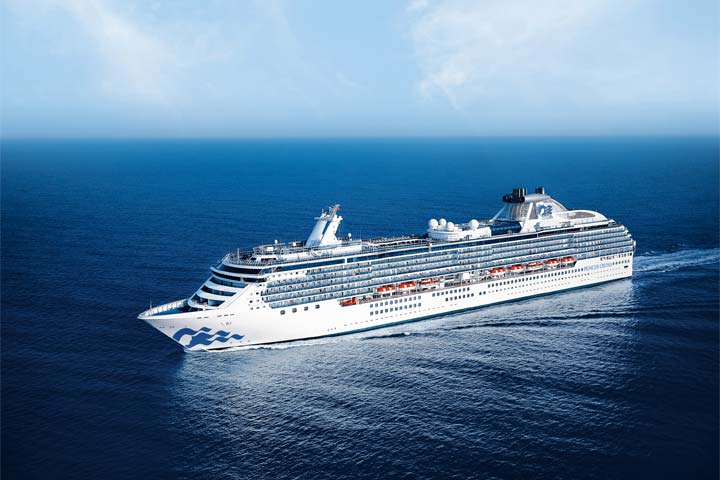
Coral Princess® offers 90% ocean-view staterooms - with over 700 balconies and a wrap-around Promenade Deck. The ship features an array of dining options, such as the Bayou Cafe & Steakhouse, as well as a European-themed casino and Crooners martini bar.
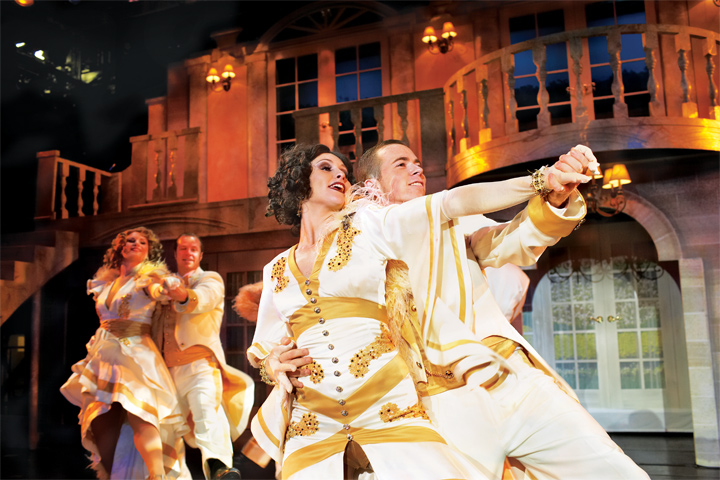
Theater
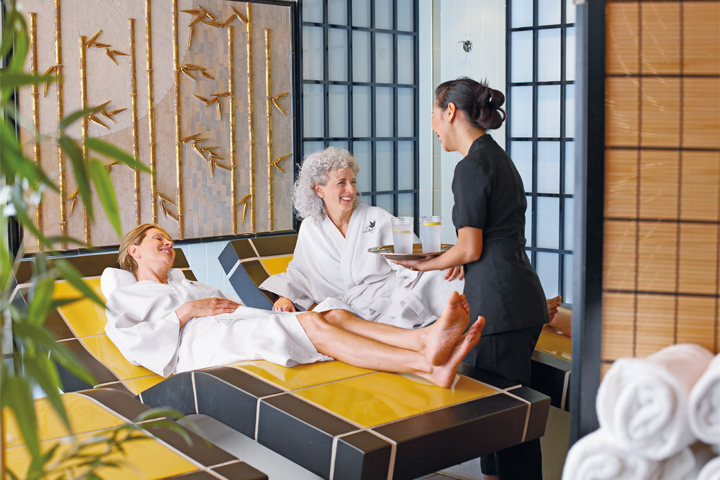
Full-Service Spa
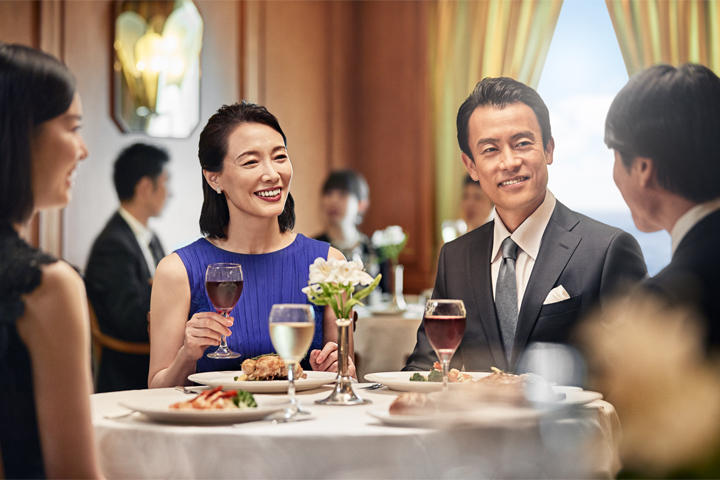
Dining Room
Bordeaux Dining Room: After final payment, through the MedallionClass® app, you may request your dining preference with Dine My Way℠. Customize your dining experiences nightly by choosing your seating time, dining companions, and dietary needs.
Provence Dining Room: After final payment, through the MedallionClass® app, you may request your dining preference with Dine My Way℠. Customize your dining experiences nightly by choosing your seating time, dining companions, and dietary needs.
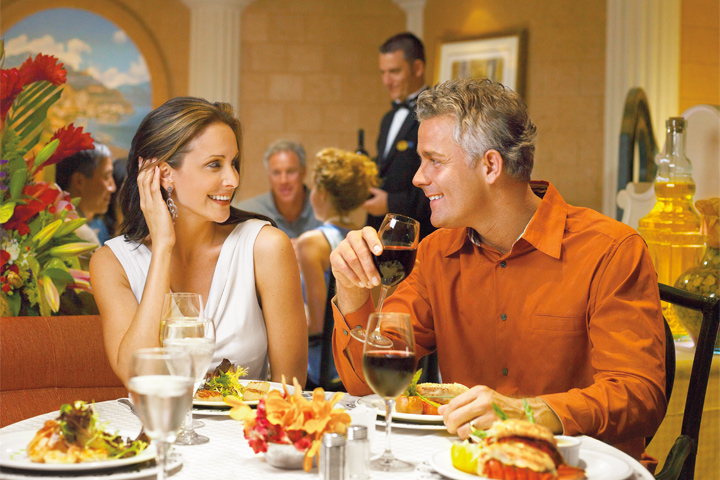
Sabatini's Trattoria
Bayou Café & Steakhouse℠: Experience the first New Orleans-style restaurant at sea, featuring Creole and Cajun traditional cuisines, such as jambalaya, etouffee, and crawfish gumbo. This restaurant is available for an additional cost.
Chef's Table Experience: Taking dining to a new level, the Chef’s Table Experience includes pre-dinner cocktails and hors d’oeuvres in the galley for you and a limited number of fellow guests. After your executive chef describes the specially designed menu for the night, participants are escorted to an intimate table for the main course, including pairing suggestions. This restaurant is available for an additional cost. Limited capacity, reservations required.
Sabatini's℠ Italian Trattoria: A new menu features handmade pasta dishes from Chef Angelo Auriana of renowned L.A. restaurants The Factory Kitchen and Officine BRERA, plus treasured family recipes from Italian chefs across the fleet. This restaurant is available for an additional cost.
Ultimate Balcony Dining: A luxurious breakfast experience at sea all served right on the privacy of your own balcony by dedicated waitstaff. Treat yourself to this unparalleled indulgence and savor food, views, and memories that will never be forgotten. This option is available for an additional cost.
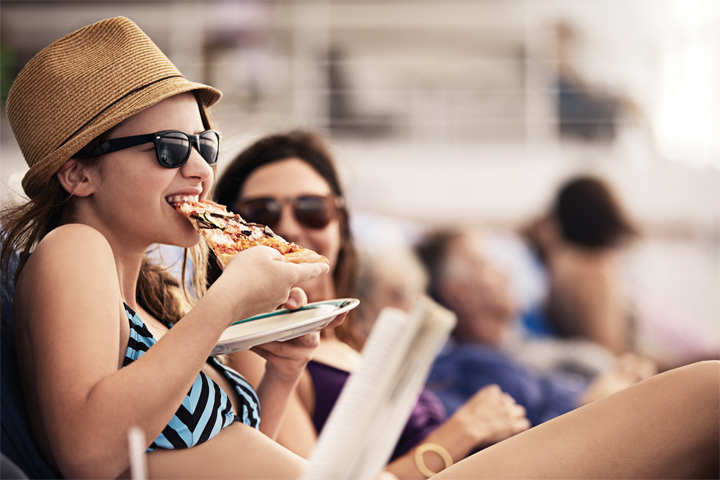
Princess Pizzeria
Horizon Court: Offering 24-hour casual buffet dining.
International Café: Open 24-hours a day, the International Café located in the Piazza is the place for an ever-changing array of small-bite meals, treats and gourmet beverages. Grab a freshly baked croissant to start your day, snack on pies and quiche, or choose from a wide variety of salads and sandwiches at lunchtime, and indulge in decadent desserts in the evening. Coffee and tea fans will love the New Grounds Crafted Coffee menu featuring a variety of specialty espresso-based drinks made from a custom blend of coffee beans, as well as iced tea fusions.
Princess Pizzeria: This poolside pizzeria serves fresh pizza by the slice.
The Bar & Grill: Follow your nose to where the burgers are flipping and the hot dogs roasting, served with a variety of fixings and crisp fries. Veggie burgers, bratwurst, and grilled chicken breast are also served and all are sure to hit the spot when you're relaxing out on deck.
Room Service: Call for room service delivery or order through OceanNow® in the Princess MedallionClass® app any time of the day or night. Guests with the latest Princess Plus and Princess Premier packages enjoy OceanNow and room service delivery with no charge. Otherwise, this dining option is available for an additional cost. To order, guests can press the "Room Service" button on their stateroom phone, or order through OceanNow.
Affordable staterooms feature twin beds that make up into a queen, refrigerator, spacious closet and a bathroom with shower.

Category: IF
Approximately 156 sq. ft., this well-appointed interior stateroom provides fine amenities.
Category: IE
Approximately 156 to 166 sq. ft., this well-appointed interior stateroom provides fine amenities.
Category: ID
Approximately 156 sq. ft., this well-appointed interior stateroom provides fine amenities.
Category: IC
Approximately 156 to 166 sq. ft., this well-appointed interior stateroom provides fine amenities.
Category: IB
Approximately 156 sq. ft., this well-appointed interior stateroom provides fine amenities.
Category: IA
Approximately 156 sq. ft., this well-appointed interior stateroom provides fine amenities.
Nicely-appointed staterooms feature a picture window and bathroom with shower.
Category: OD
Approximately 162 sq. ft., this well-appointed stateroom features a picture window for memorable views.
Category: OC
Approximately 162 sq. ft., this well-appointed stateroom features a picture window for memorable views.
Category: OB
Approximately 162 sq. ft., this well-appointed stateroom features a picture window for memorable views.
Category: OZ
Approximately 162 sq. ft., this well-appointed stateroom features a picture window with an obstructed view.
Category: OY
Approximately 162 sq. ft., this well-appointed stateroom features a picture window with an obstructed view.
Category: OW
Approximately 162 sq. ft., this well-appointed stateroom features a picture window with an obstructed view.
Category: O6
Approximately 212 sq. ft., this well-appointed stateroom features a picture window for memorable views.
Category: OV
Approximately 162 sq. ft., this well-appointed stateroom features a picture window with an obstructed view.
Category: O5
Approximately 212 sq. ft., this well-appointed stateroom features a picture window for memorable views.
Category: OE
Approximately 162 sq. ft., this well-appointed stateroom features a picture window for memorable views.
Staterooms feature a private balcony, siting area with desk, spacious walk-in closet and bathroom with shower.
Category: BF
Approximately 210 sq. ft. including balcony, this cabin provides outstanding views from a private balcony.
Category: BE
Approximately 210 to 234 sq. ft. including balcony, this cabin provides outstanding views from a private balcony.
Category: BD
Approximately 210 to 234 sq. ft. including balcony, this cabin provides outstanding views from a private balcony.
Category: BC
Approximately 210 sq. ft. including balcony, this cabin provides outstanding views from a private balcony.
Category: B2
Approximately 248 sq. ft. including balcony, this cabin provides outstanding views from a private balcony.
Category: BB
Approximately 210 sq. ft. including balcony, this cabin provides outstanding views from a private balcony.
Category: B1
Approximately 248 sq. ft. including balcony, this cabin provides outstanding views from a private balcony.
Category: BA
Approximately 210 to 234 sq. ft. including balcony, this cabin provides outstanding views from a private balcony.
Category: BZ
Approximately 210 sq. ft. including balcony, this cabin has an obstructed view balcony from which to enjoy the fresh sea air.
Category: BY
Approximately 210 sq. ft. including balcony, this cabin has an obstructed view balcony from which to enjoy the fresh sea air.
Features separate sitting area with sofa bed and desk, refrigerator, some with wet bar, bathroom and balcony or window.
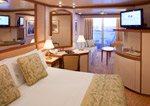
Category: MB
Approximately 280 to 302 sq. ft. including balcony, this spacious cabin provides a seating area with sofa bed, and full bath with combination tub and shower.
Category: M1
Approximately 280 to 302 sq. ft. including balcony, this spacious stateroom provides a seating area with sofa bed, and full bath with combination tub and shower.
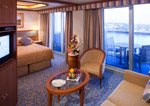
Category: S6
Approximately 470 sq. ft. including balcony, the Vista Suite features a spacious cabin and separate seating area with a sofa bed. Enjoy exclusive suite-only upgrades and benefits.
Category: S5
Approximately 470 sq. ft. including balcony, the Premium Suite features a spacious cabin and separate seating area with a sofa bed. Enjoy exclusive suite-only upgrades and benefits.
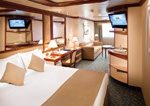
Category: MY
Approximately 162 sq. ft., this well-appointed stateroom features a picture window for memorable views.
Category: ME
Approximately 302 sq. ft. including balcony, this spacious cabin provides a seating area with sofa bed, and full bath with combination tub and shower.
Category: MD
Approximately 302 sq. ft. including balcony, this spacious cabin provides a seating area with sofa bed, and full bath with combination tub and shower.


| Symbol | Description |
|---|---|
 | Will accommodate third and fourth person |
 | Will accommodate a rollaway |
 | Wheelchair-accessible stateroom; roll-in shower only |
 | Will accommodate third person |
 | Ambulatory accessible stateroom, accessible features may include grab bars and/or fold down shower seats |
 | Connecting staterooms |
*Price shown is per person based on double occupancy and is valid for select stateroom categories only. Click on the Terms & Conditions link below for details.
†One Digital Costco Shop Card per room/stateroom, per stay. The exact amount of the Digital Costco Shop Card will be calculated during the booking process. The Digital Costco Shop Card promotion is nontransferable and may not be combined with any other promotion. A Digital Costco Shop Card will arrive by email approximately 10 days after the start of your cruise. Click on the Terms & Conditions link below for additional information.
Ship's registry: © Princess Cruise Lines, Ltd. Ships of Bermudan and British registry
Package ID: PCLCORWOR20270331
Book this cruise with Costco Travel and receive a Digital Costco Shop Card. The Digital Costco Shop Card is a convenient payment option in our warehouses and on Costco.com.

We are processing your payment.
Do not refresh your browser or exit this page.


|
No Image Available |
 Canada
 Australia



