
 Help Center

 United States
 Canada
 Australia
Coupon Override
Please Call
For drivers under the age of 25, additional fees and/or restrictions may apply.
For information and assistance in completing your reservation, please call:
1-866-921-7925Sorry
We're unable to find your location.

Asia Africa and Middle East: Circle Japan Cruise

Included Extras


Executive Member Benefit
Executive Members receive an annual 2% Reward, up to $1,250, on qualified Costco Travel purchases

Digital Costco Shop Card
Member Exclusive: Digital Costco Shop Card with every Holland America Line sailing†
Sailing Itinerary

Note: Cruise itineraries are subject to change. Please verify ports and times directly with the cruise line.

Overview


Describing Tokyo to someone who has never been here is a formidable task. After all, how do you describe a city that--as one of my friends visiting Tokyo for the first time put it--seems like it's part of another planet? To be sure, Tokyo is very different from Western capitals, but what sets it apart is its people. Approximately 12 million people reside within Tokyo's 1,200,000,000 sq. km (800 sq. miles), and almost one-fourth of Japan's total population lives within commuting distance of the city. This translates into a crush of humanity that packs the subways, crowds the sidewalks, and fills the department stores beyond belief. In some parts of the city, the streets are as crowded at 3 am as they are at 3 pm. With its high-energy, visual overload, Tokyo makes even New York seem like a sleepy, laid-back town. And yet, despite its limited space for harmonious living, Tokyo remains one of the safest cities in the world, with remarkably little crime or violence. No matter how lost I may become, I know that people will go out of their way to help me. Hardworking, honest, and helpful to strangers, the Japanese are their country's greatest asset. With Tokyo so densely packed, it comes as no shock to learn that land here is more valuable than gold and that buildings are built practically on top of each other, shaped like pieces in a jigsaw puzzle to fit the existing plots of real estate. More than perhaps any other city in the world, Japan's capital is a concrete jungle, with a few parks but not many trees to break the monotony, and it stretches on and on as far as the eye can see. Fires, earthquakes, wars, the zeal for modernization, and the price of land have taken their toll on the city, eradicating almost all evidence of previous centuries. It's as though Tokyo was born only this morning, with all the messy aftermath of a city conceived without t plan and interested only in the future. Thus, first-time visitors to Tokyo are almost invariably disappointed. They come expecting an exotic Asian city, but instead find a megalopolis Westernized to the point of drabness. Used to the grand edifices and monuments of Western cities, they look in vain for Tokyo's monuments to its past--ancient temples, exquisite gardens, imperial palaces, or whatever else they've imagined. Instead, they find what may be, quite arguably, one of the ugliest cities in the world. So, while Tokyo is one of my favorite cities, it's an appreciation that came only with time. When I first moved here, I was tormented by the unsettling feeling that I was somehow missing out on the "real" Tokyo. Even though I was living and working here, Tokyo seemed beyond my grasp, elusive, vague, and undefined. I felt that the meaning of the city was out there somewhere if only I knew where to look. With time, I finally learned that I needn't look farther than my front window. Tokyo has no center but rather is made up of a series of small towns and neighborhoods clustered together, each with its history, flavor, and atmosphere. There are narrow residential streets, ma-and-pa shops, fruit stands, and stores. There's the neighborhood tofu factory, the lunch-box stand, the grocery shop, and the tiny police station, where the cops know the residents by name and patrol the area by bicycle. There are carefully pruned bonsai trees gracing sidewalks, women in kimonos bowing and shuffling down streets, and wooden homes on impossibly narrow streets. Walk in the old downtown neighborhoods of Asakusa or Yanaka and you're worlds apart from the trendy quarters of Harajuku or the high-rises of Shinjuku. Neighborhoods like these make Tokyo lovable and livable. What's more, once visitors get to know Tokyo better, they learn that you can't judge Tokyo by what it looks like on the outside, for this is a city of interiors. Even those concrete monsters may house interiors that are fascinating in design and innovation. In the basement of that drab building could well be a restaurant with wooden beams, mud walls, and thatched ceiling, imported intact from a farmhouse in the Japan Alps; on its roof could be a small Shinto shrine, while the top floor could house a high-tech bar or a sophisticated French restaurant. And beneath Tokyo's concrete shell is a thriving cultural life left very much intact. If,f you're interested in Japan's performing arts as well as such diverse activities as the tea ceremony or sumo, Tokyo is your best bet for offering the most at any one time. Tokyo is also rich in museums and claims the largest repository of Japanese art in the world. It also gets my vote as the pop-art capital of the world; if you're into kitsch, you'll be in high heaven. I can't imagine being bored here, even for just a minute.
Overview

Blessed with a mild climate throughout the year, Shimizu is known for producing mandarin oranges, tea, and strawberries. On the coast, there is a pine-tree grove on a sand spit called Miho no Matsubara which is often mentioned in legends. From the small mountain called Nihondaira tourists can enjoy a superb view of Mt. Fuji and the light-filled city at night. Picking strawberries during the winter and spring months is a popular pastime.
Overview

As a center of river and sea transportation called the City of Water, Osaka has engaged in active exchanges not only with other parts of Japan but also with the Chinese Continent and the Korean Peninsula. Naniwazu.In the mid-7th century, an area in Osaka was designated the capital of Japan; the area prospered as Japan's oldest city. Even after the capital was moved first to Nara, and then to Kyoto, Osaka, as a key point in foreign trade, continued to play an important role in the development of Japan and the international exchange of culture. In the Middle Ages, Osaka developed as a temple town where Ishiyama Honganji Temple was located; during this period, Osaka served as a key point in the itinerary of pilgrims. In early modern times, the City grew into Japan's center of commerce and distribution. During this period, Osaka came to be characterized by enterprising and free-thinking merchants, and art and culture flourished in the City, where bunraku, kabuki, ki, and other traditional arts developed. As indicated above, Osaka is a city with precious historical and cultural heritage. As Osaka develops into an international tourist city, loved by people from around the world, it is hoped that many people will gather here for recreation, and become regular visitors to the City. Osaka welcomes tourists as a city with advanced technology, refined food culture, and shops with goods from around the world. Come visit Osaka for its many charms, and enjoy a holiday in the City that is just for you.
Overview

Hiroshima City facing Hiroshima Bay in the Seto Inland Sea is one of the most prominent cities in the Chugoku region, and a center of the administration and economy of Hiroshima. Six rivers flow through the city, so it is also called the "city of water." It was devastated by an atomic bomb in World War II. All structures vanished, but one miraculously remained standing. It is called the Hiroshima Atomic Bomb Dome, and Hiroshima is internationally known as the city of peace. Hiroshima developed as a castle town after a feudal lord, Mori Terumoto, built Hiroshima Castle in the 16th century. Hiroshima Castle is also called Ri-jo, or Carp Castle because the exterior painted in black resembles a black carp. There are several must-see places, such as the Shukukei-en Garden, or a miniature scenery garden, so named because there is a miniature version of Lake Xiyu (West Lake) in Hangzhou in China and many other miniatures of scenic sights, and the old Mitaki-dera Temple built in 809. The red Taho-to Tower in the Mitaki-dera Temple was transferred from a shrine in Wakayama as a memorial tower for the victims of the atomic bomb attack. Hiroshima also offers gastronomical pleasure, including oysters the culture of which has been going on since 1673, and okonomi-yaki Hiroshima style, unique flour crepes fried with vegetables and noodles that are different at each restaurant.
Overview

The Kanmon Strait is the stretch of water separating two of Japan's four main islands. On the Honshu side of the water is Shimonoseki and on the Kyushu side is Moji port, now part of Kitakyushu City. The Kanmon Strait can be traversed in a number of ways, the oldest of which is the ferry. There is also a bridge which carries an expressway. By far the most used method is the Kanmon Tunnel which carries the Shinkansen, trains, cars and even pedestrians.
Overview

Busan/Pusan is Korea's second largest city. Tourists often come to this region to hike and to visit the Buddhist Temples located deep within the region's mountains. The Beomeosa Temple, founded in 678 AD, is perhaps one of the most frequented temples in the area and is always packed with worshipers and tourists. For art buffs, Busan offers several museums and historical buildings. If scenery is your thing, try visiting the Dongbaek Island, or bird watch at the Nakdong river estuary.
Overview

The smallest city in Tottori, Sakaiminato City has only 37,392 (2004) people living there. It's located on the westernmost section of the oast in Tottori on the Yumigahama Peninsula which encloses the Sea of Naka behind it. Thus, the city is surrounded by water on three sides and Yonago City to its east. Miho Airbase (JSDF) which also doubles as Yonago Airport is located in Sakaiminato. Its citizens rejected an attempt to merge with Yonago City.
Overview

Maizuru is a city in south-central Japan. The Goro Sky Tower has panoramic views over the islands of Maizuru Bay. Maizuru Park contains the ruins of Tanabe Castle and is known for spring cherry blossoms. East, Brick Park is a group of Meiji-era warehouses, now home to the World Brick Museum. Kongo-in Temple is known for its ornate pagoda and fall colors. On the north coast, Ryuguhama Beach faces the Sea of Japan.
Overview

Kanazawa is a castle town that was ruled over by the Maeda family for three centuries after the first lord Toshiie Maeda entered Kanazawa Castle in 1583. The development of its special products like rice, sake, sweets, etc. was due to its temperate and rainy climate with heavy snow in winter. The city is surrounded by the Japan Alps, Hakusan National Park, and Noto Peninsula National Park. Two rivers run through the city; the Sai is said to be a lively masculine river and the Asanoise is a sweet, feminine river. Such a natural background of great beauty gives the city a relaxed feeling. Since the Kaga Clan invited many artists and craftsmen to this area, it achieved a high level of craftsmanship that continues to flourish to this day. The buildings that gave birth to these traditions stand tranquility and blend in with the modern atmosphere in Kanazawa to create a charming ancient castle town.
Overview

Hakodate is a city and port located in Oshima. It is the capital city of Oshima Subprefecture. The city is overlooked by Hakodateyama (Mount Hakodate), a lumpy, totally-forested mountain. The summit of the mountain is easily reached by either hiking trail cable car, or car. The nighttime view from the summit is renowned all over Japan as one of the loveliest sights in the country. A not-so-well-known local nickname for the bumpy mountain is Gagyuzan ("Mount Cow's-back"), which alludes to the way the mountain's shape resembles that of a resting cow. Hakodate is home to the famous European-style Goryokaku fort, which was built in the shape of a five-pointed star in 1866. It is now used as a public park. The park is a popular spot in Hokkaido for hanami (cherry blossom viewing). The small but bustling city is also famous as the site of Hijikata Toshizo's last stand. The city is also known for Hakodate Shio Ramen, where instead of having pork cutlet placed inside the soup, sliced squid is used. On a similar note, Hakodate's city fish is the squid. Every year (around July) the city gets together for the Hakodate Port Festival. Hordes of citizens gather in the streets to dance a wiggly dance known as the Ika-odori (Squid Dance), the name of which describes the dance appropriately. The glowing lights of squid-catching boats can be seen in the waters surrounding the city.
Overview

Miyako is a city located in Iwate Prefecture, in the Tohoku region of northern Japan. As of September 2015, the city had an estimated population of 55,041 and a population density of 43.7 persons per km².
Overview

Hitachinaka is a city located in Ibaraki Prefecture, in the northern Kanto region of Japan. As of September 2015, the city had an estimated population of 156,619 and a population density of 1,570 persons per km².
Overview
Describing Tokyo to someone who has never been here is a formidable task. After all, how do you describe a city that--as one of my friends visiting Tokyo for the first time put it--seems like it's part of another planet? To be sure, Tokyo is very different from Western capitals, but what sets it apart is its people. Approximately 12 million people reside within Tokyo's 1,200,000,000 sq. km (800 sq. miles), and almost one-fourth of Japan's total population lives within commuting distance of the city. This translates into a crush of humanity that packs the subways, crowds the sidewalks, and fills the department stores beyond belief. In some parts of the city, the streets are as crowded at 3 am as they are at 3 pm. With its high-energy, visual overload, Tokyo makes even New York seem like a sleepy, laid-back town. And yet, despite its limited space for harmonious living, Tokyo remains one of the safest cities in the world, with remarkably little crime or violence. No matter how lost I may become, I know that people will go out of their way to help me. Hardworking, honest, and helpful to strangers, the Japanese are their country's greatest asset. With Tokyo so densely packed, it comes as no shock to learn that land here is more valuable than gold and that buildings are built practically on top of each other, shaped like pieces in a jigsaw puzzle to fit the existing plots of real estate. More than perhaps any other city in the world, Japan's capital is a concrete jungle, with a few parks but not many trees to break the monotony, and it stretches on and on as far as the eye can see. Fires, earthquakes, wars, the zeal for modernization, and the price of land have taken their toll on the city, eradicating almost all evidence of previous centuries. It's as though Tokyo was born only this morning, with all the messy aftermath of a city conceived without t plan and interested only in the future. Thus, first-time visitors to Tokyo are almost invariably disappointed. They come expecting an exotic Asian city, but instead find a megalopolis Westernized to the point of drabness. Used to the grand edifices and monuments of Western cities, they look in vain for Tokyo's monuments to its past--ancient temples, exquisite gardens, imperial palaces, or whatever else they've imagined. Instead, they find what may be, quite arguably, one of the ugliest cities in the world. So, while Tokyo is one of my favorite cities, it's an appreciation that came only with time. When I first moved here, I was tormented by the unsettling feeling that I was somehow missing out on the "real" Tokyo. Even though I was living and working here, Tokyo seemed beyond my grasp, elusive, vague, and undefined. I felt that the meaning of the city was out there somewhere if only I knew where to look. With time, I finally learned that I needn't look farther than my front window. Tokyo has no center but rather is made up of a series of small towns and neighborhoods clustered together, each with its history, flavor, and atmosphere. There are narrow residential streets, ma-and-pa shops, fruit stands, and stores. There's the neighborhood tofu factory, the lunch-box stand, the grocery shop, and the tiny police station, where the cops know the residents by name and patrol the area by bicycle. There are carefully pruned bonsai trees gracing sidewalks, women in kimonos bowing and shuffling down streets, and wooden homes on impossibly narrow streets. Walk in the old downtown neighborhoods of Asakusa or Yanaka and you're worlds apart from the trendy quarters of Harajuku or the high-rises of Shinjuku. Neighborhoods like these make Tokyo lovable and livable. What's more, once visitors get to know Tokyo better, they learn that you can't judge Tokyo by what it looks like on the outside, for this is a city of interiors. Even those concrete monsters may house interiors that are fascinating in design and innovation. In the basement of that drab building could well be a restaurant with wooden beams, mud walls, and thatched ceiling, imported intact from a farmhouse in the Japan Alps; on its roof could be a small Shinto shrine, while the top floor could house a high-tech bar or a sophisticated French restaurant. And beneath Tokyo's concrete shell is a thriving cultural life left very much intact. If,f you're interested in Japan's performing arts as well as such diverse activities as the tea ceremony or sumo, Tokyo is your best bet for offering the most at any one time. Tokyo is also rich in museums and claims the largest repository of Japanese art in the world. It also gets my vote as the pop-art capital of the world; if you're into kitsch, you'll be in high heaven. I can't imagine being bored here, even for just a minute.
Onboard the Noordam
Noordam
Costco Member Reviews

Year Built: 2006
Year Refurbished: 2015
Double Occupancy Capacity: 1918
Named for the Northern compass point, Noordam features museum-quality art such as an oil painting of the city of Utrecht painted in 1842, as well as contemporary art like the series of photographs of music greats Dizzy Gillespie and B.B. King. Noordam guests enjoy dazzling entertainment options from their very first night on board, including B.B. King’s Blues Club. Enjoy exciting activities like cooking shows and hands-on workshops that allow you to pursue new interests or simply relax and rejuvenate.
Onboard Activities
Activities & Services (included in cruise)
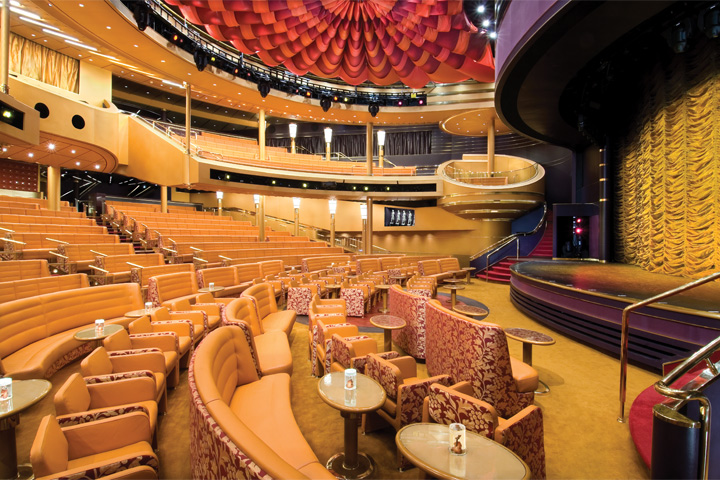
Vista Lounge
- Art Gallery
- Bars/Lounges
- Business Center
- Card Room
- Casino
- Children's Indoor Play Area
- Concierge Desk
- Culinary Arts Center
- Disco/Nightclub
- Duty-Free Shops/Boutiques
- Educational Programs
- Elevators
- Fitness Center
- Library
- Movies
- Organized Age-Specific Activities
- Pool - Outdoor
- Safe Deposit Boxes
- Sauna/Steam Room
- Sports Facilities
- Teen Center or Disco
- Teen Programs
- Theaters/Show Lounge
- Whirlpool/Jacuzzi
Activities & Services (available for an extra fee)
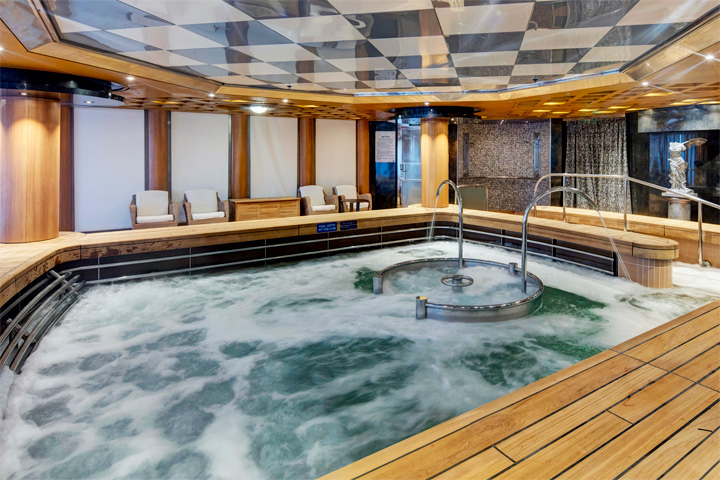
Greenhouse Spa
- Babysitting
- Beauty Salon
- Dry Cleaning/Laundry Service
- Full-Service Spa
- Infirmary/Medical Center
- Internet Center
Dining
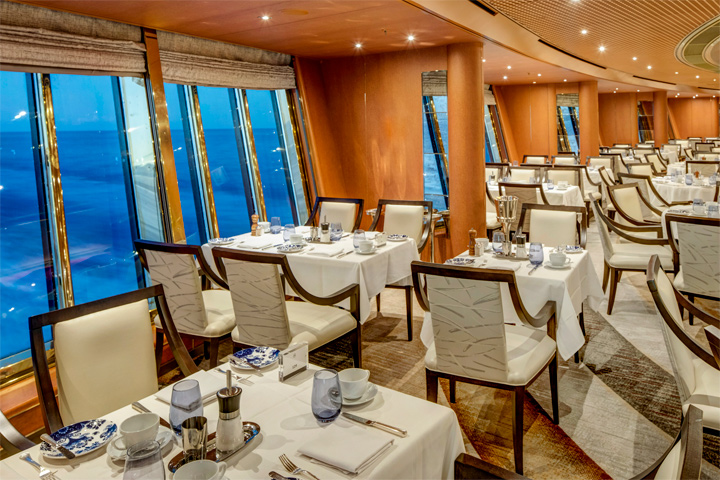
The Dining Room
Main Dining
The Dining Room: For breakfast, lunch or an unforgettable five-course dinner, the elegant main Dining Room is your destination for sophisticated dining, with menu selections from classic favorites to vegetarian options, to dishes inspired by the regions you’ll visit. Menus by Holland America Line's Culinary Council® of world-renowned chefs.
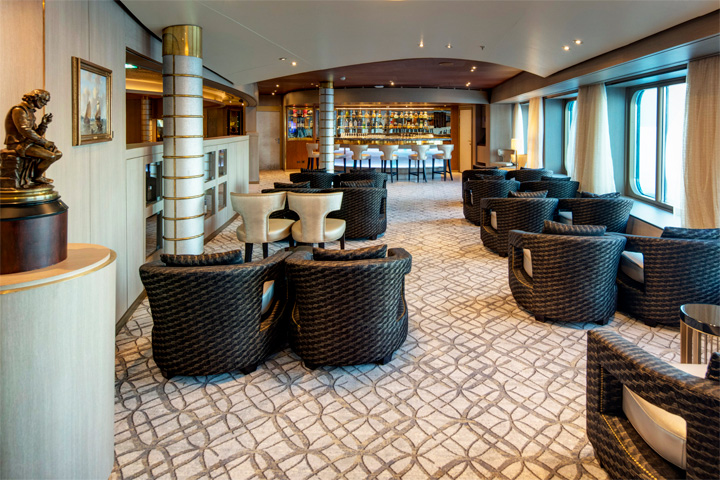
Pinnacle Grill
Specialty Dining
Pinnacle Grill: Enjoy dishes inspired by America’s Pacific Northwest, such as king salmon from Alaska and choice, responsibly raised beef from Washington State’s Double R Ranch. Complement your meal with a selection of boutique wines from the Pacific Northwest and other celebrated vineyards from around the world. This restaurant is available for an additional cost.
Canaletto: This authentic Italian restaurant offers a menu that celebrates spartire (Italian for "sharing"). Try Braised Chicken Cacciatore "al Forno", Branzino ai Ferri or a classic Italian pasta: spaghetti pomodoro or garlic shrimp-infused ravioli, perhaps. Buon appetito! This restaurant is available for an additional cost.
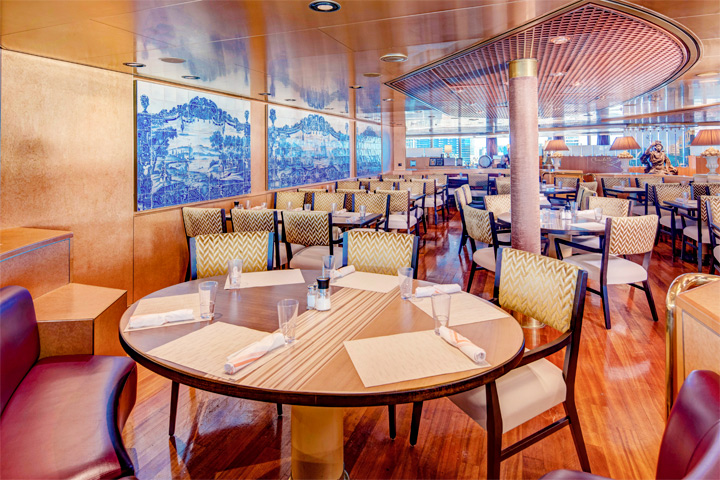
Lido Market
Casual Dining
Lido Market: Lido Market provides a fresh, new approach to casual dining for breakfast, lunch or dinner, with a panoramic view of the sea. A modern marketplace with different themed stations, the Lido offers a curated selection of delicious options to grab on the go or to have quickly made to order.
Dive-In: Dive in to a grilled burger on brioche or a Nathan’s Famous gourmet hot dog. For alfresco dining by the pool, Dive-In has it all, including lighter fare like the grilled chicken breast sandwich and vegetarian-friendly portabella mushroom stack.
Explorations Café: A comfortable, coffeehouse environment offering espresso drinks and pastries. This restaurant is available for an additional cost.
Room Service: Complimentary 24-hour dining in the comfort of your stateroom.
Staterooms
Staterooms feature premium massage showerheads, fine linens and fresh fruit upon request.
- Standard Interior Stateroom (Category: M)

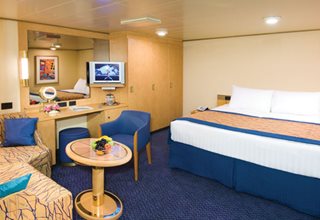
Category: M
These comfortable 143–225 sq.ft staterooms feature ample storage space and two beds that convert to one queen-size bed — the signature Mariner's Dream™ bed with plush euro-top mattress — premium massage showerheads and a host of amenities.
- Standard Interior Stateroom (Category: L)
Category: L
These comfortable 143–225 sq.ft staterooms feature ample storage space and two beds that convert to one queen-size bed — the signature Mariner's Dream™ bed with plush euro-top mattress — premium massage showerheads and a host of amenities.
- Interior Stateroom (Category: K)
Category: K
These comfortable 143–225 sq.ft staterooms feature ample storage space and two beds that convert to one queen-size bed — the signature Mariner's Dream™ bed with plush euro-top mattress — premium massage showerheads and a host of amenities.
- Interior Stateroom (Category: J)
Category: J
These comfortable 143–225 sq.ft staterooms feature ample storage space and two beds that convert to one queen-size bed — the signature Mariner's Dream™ bed with plush euro-top mattress — premium massage showerheads and a host of amenities.
- Large Interior Stateroom (Category: I)
Category: I
These comfortable 143–225 sq.ft staterooms feature ample storage space and two beds that convert to one queen-size bed — the signature Mariner's Dream™ bed with plush euro-top mattress — premium massage showerheads and a host of amenities.
- Standard Interior Stateroom (Category: MM)
Category: MM
These comfortable 143–225 sq.ft staterooms feature ample storage space and two beds that convert to one queen-size bed — the signature Mariner's Dream™ bed with plush euro-top mattress — premium massage showerheads and a host of amenities.
- Standard Interior Stateroom (Category: N)
Category: N
These comfortable 143–225 sq.ft staterooms feature ample storage space and two beds that convert to one queen-size bed — the signature Mariner's Dream™ bed with plush euro-top mattress — premium massage showerheads and a host of amenities.
Elegant staterooms feature luxurious bedding, premium massage showerheads, a porthole or a window and fresh fruit upon request.
- Large Outside Stateroom (fully obstructed views) (Category: H)
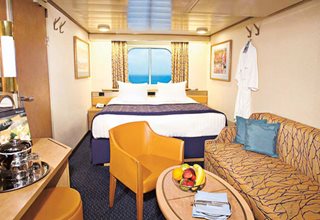
Category: H
With a view of the ocean through a window or porthole, these expansive staterooms include a sitting area, two beds that convert to one queen-size bed — the signature Mariner's Dream™ bed with plush euro-top mattress — premium massage showerheads, and a host of amenities.
- Large Outside Stateroom (partial sea views) (Category: G)
Category: G
With a view of the ocean through a window or porthole, these expansive staterooms include a sitting area, two beds that convert to one queen-size bed — the signature Mariner's Dream™ bed with plush euro-top mattress — premium massage showerheads, and a host of amenities.
- Large Ocean-View Stateroom (Category: F)
Category: F
With a view of the ocean through a window or porthole, these expansive staterooms include a sitting area, two beds that convert to one queen-size bed — the signature Mariner's Dream™ bed with plush euro-top mattress — premium massage showerheads, and a host of amenities.
- Large Ocean-View Stateroom (Category: E)
Category: E
With a view of the ocean through a window or porthole, these expansive staterooms include a sitting area, two beds that convert to one queen-size bed — the signature Mariner's Dream™ bed with plush euro-top mattress — premium massage showerheads, and a host of amenities.
- Large Ocean-View Stateroom (Category: D)
Category: D
With a view of the ocean through a window or porthole, these expansive staterooms include a sitting area, two beds that convert to one queen-size bed — the signature Mariner's Dream™ bed with plush euro-top mattress — premium massage showerheads, and a host of amenities.
- Large Ocean-View Stateroom (Category: C)
Category: C
With a view of the ocean through a window or porthole, these expansive staterooms include a sitting area, two beds that convert to one queen-size bed — the signature Mariner's Dream™ bed with plush euro-top mattress — premium massage showerheads, and a host of amenities.
- Large Ocean-View Stateroom (Category: DD)
Category: DD
With a view of the ocean through a window or porthole, these expansive staterooms include a sitting area, two beds that convert to one queen-size bed — the signature Mariner's Dream™ bed with plush euro-top mattress — premium massage showerheads, and a host of amenities.
- Large Outside Stateroom (fully obstructed views) (Category: HH)
Category: HH
With a view of the ocean through a window or porthole, these expansive staterooms include a sitting area, two beds that convert to one queen-size bed — the signature Mariner's Dream™ bed with plush euro-top mattress — premium massage showerheads, and a host of amenities.
Spacious staterooms have a private balcony, whirlpool bath with shower and walk-in closet.
- Deluxe Ocean-View Verandah Stateroom (Category: VH)
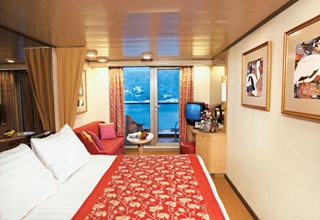
Category: VH
Floor-to-ceiling glass doors lead to your private balcony, infusing these coveted 228–405 sq.ft staterooms with natural light. Enjoy a private verandah overlooking the ocean, a spacious sitting area for unwinding, and our signature Mariner's Dream™ bed that can convert from one queen to two beds.
- Deluxe Ocean-View Verandah Stateroom (Category: VD)
Category: VD
Floor-to-ceiling glass doors lead to your private balcony, infusing these coveted 228–405 sq.ft staterooms with natural light. Enjoy a private verandah overlooking the ocean, a spacious sitting area for unwinding, and our signature Mariner's Dream™ bed that can convert from one queen to two beds.
- Deluxe Ocean-View Verandah Stateroom (Category: VE)
Category: VE
Floor-to-ceiling glass doors lead to your private balcony, infusing these coveted 228–405 sq.ft staterooms with natural light. Enjoy a private verandah overlooking the ocean, a spacious sitting area for unwinding, and our signature Mariner's Dream™ bed that can convert from one queen to two beds.
- Deluxe Ocean-View Verandah Stateroom (Category: VF)
Category: VF
Floor-to-ceiling glass doors lead to your private balcony, infusing these coveted 228–405 sq.ft staterooms with natural light. Enjoy a private verandah overlooking the ocean, a spacious sitting area for unwinding, and our signature Mariner's Dream™ bed that can convert from one queen to two beds.
- Deluxe Ocean-View Verandah Stateroom (Category: VA)
Category: VA
Floor-to-ceiling glass doors lead to your private balcony, infusing these coveted 228–405 sq.ft staterooms with natural light. Enjoy a private verandah overlooking the ocean, a spacious sitting area for unwinding, and our signature Mariner's Dream™ bed that can convert from one queen to two beds.
- Deluxe Ocean-View Verandah Stateroom (Category: VB)
Category: VB
Floor-to-ceiling glass doors lead to your private balcony, infusing these coveted 228–405 sq.ft staterooms with natural light. Enjoy a private verandah overlooking the ocean, a spacious sitting area for unwinding, and our signature Mariner's Dream™ bed that can convert from one queen to two beds.
- Deluxe Ocean-View Verandah Stateroom (Category: VC)
Category: VC
Floor-to-ceiling glass doors lead to your private balcony, infusing these coveted 228–405 sq.ft staterooms with natural light. Enjoy a private verandah overlooking the ocean, a spacious sitting area for unwinding, and our signature Mariner's Dream™ bed that can convert from one queen to two beds.
Luxurious suites feature a whirlpool bath, large sitting area, private balcony, floor-to-ceiling windows and more. Select suites feature a dressing room.
- Pinnacle Penthouse Verandah Suite (Category: PS)
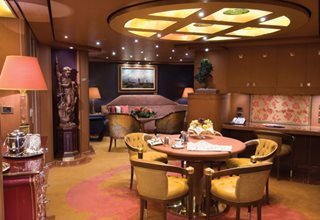
Category: PS
The premier 1,150 sq.ft Pinnacle Suite features floor-to-ceiling glass doors, a large private verandah, living, dining, and dressing rooms, and lush sleeping accommodations with luxurious Duxiana® king beds. These elegant suites sleep up to four guests and include a deep soaking tub and an independent, full-size shower stall, dual-sink vanities, and guest toilets.- 1,290 sq.ft
- Exclusive access to the Neptune Lounge
- Personal concierge
- Priority check-in
- Complimentary laundry service, pressing, and dry cleaning
- Neptune Deluxe Verandah Suite (Category: SA)
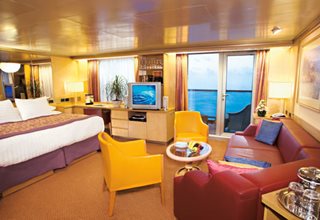
Category: SA
Featuring floor-to-ceiling glass doors, a spacious private verandah, expansive sitting areas, and comfortable sleeping accommodations with Mariner's Dream™ beds, the 465–502 sq.ft suite sleeps up to four guests and boasts a deep soaking tub and an independent, full-size shower stall, dual-sink vanities, premium bathrobes, pillow menus, fresh flowers, and binoculars.- 465–502 sq.ft
- Exclusive use of Neptune Lounge
- Personal concierge
- Priority check-in
- Complimentary laundry service, pressing, and dry cleaning
- Neptune Deluxe Verandah Suite (Category: SB)
Category: SB
Featuring floor-to-ceiling glass doors, a spacious private verandah, expansive sitting areas, and comfortable sleeping accommodations with Mariner's Dream™ beds, the 465–502 sq.ft suite sleeps up to four guests and boasts a deep soaking tub and an independent, full-size shower stall, dual-sink vanities, premium bathrobes, pillow menus, fresh flowers, and binoculars.- 465–502 sq.ft
- Exclusive use of Neptune Lounge
- Personal concierge
- Priority check-in
- Complimentary laundry service, pressing, and dry cleaning
- Neptune Deluxe Verandah Suite (Category: SC)
Category: SC
Featuring floor-to-ceiling glass doors, a spacious private verandah, expansive sitting areas, and comfortable sleeping accommodations with Mariner's Dream™ beds, the 465–502 sq.ft suite sleeps up to four guests and boasts a deep soaking tub and an independent, full-size shower stall, dual-sink vanities, premium bathrobes, pillow menus, fresh flowers, and binoculars.- 465–502 sq.ft
- Exclusive use of Neptune Lounge
- Personal concierge
- Priority check-in
- Complimentary laundry service, pressing, and dry cleaning
Deck Plan


| Symbol | Description |
|---|---|
 | Partial sea view |
 | Shower only |
 | Triple (2 lower beds, 1 sofa bed) |
 | Single sink vanity |
 | Suites SC6175 and SC6164 are fully accessible, bathtub and roll-in shower; Suite SS6108 and staterooms I8037, VB6004, VB6003, D1100, C1082, C1081, J1074, K1012, and K1011 are fully accessible, roll-in shower only |
 | Quad (2 lower beds, 1 sofa bed, 1 upper) |
 | Fully obstructed view |
 | Staterooms have solid steel verandah railings instead of clear-view plexiglass railings |
 | Staterooms VA8032, VA8031, VA6049, VA5140, VA5137, VA5054, VA5051, VA4132, VA4131, H4090, H4089, VA4052, and VA4051 are ambulatory accessible, roll-in shower only |
 | Suites SY8068, SY5002, and SY5001 are fully accessible with single side approach to the bed, bathtub, and roll-in shower |
| Partial sea view |
| Shower only |
| Triple (2 lower beds, 1 sofa bed) |
| Single sink vanity |
| Suites SC6175 and SC6164 are fully accessible, bathtub and roll-in shower; Suite SS6108 and staterooms I8037, VB6004, VB6003, D1100, C1082, C1081, J1074, K1012, and K1011 are fully accessible, roll-in shower only |
| Quad (2 lower beds, 1 sofa bed, 1 upper) |
| Fully obstructed view |
| Staterooms have solid steel verandah railings instead of clear-view plexiglass railings |
| Staterooms VA8032, VA8031, VA6049, VA5140, VA5137, VA5054, VA5051, VA4132, VA4131, H4090, H4089, VA4052, and VA4051 are ambulatory accessible, roll-in shower only |
 | Quad (2 lower beds, 1 sofa bed for 2 persons) |
| Suites SY8068, SY5002, and SY5001 are fully accessible with single side approach to the bed, bathtub, and roll-in shower |
Ship Facts
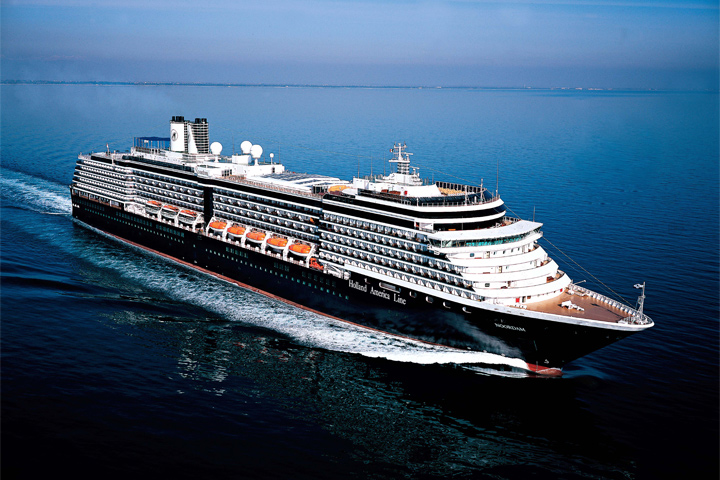
- Ship Name: Noordam
- Ship Name: Noordam
- Year Built: 2006
- Year Refurbished: 2015
- Year Entered Present Fleet: 2006
- Ship Class: Vista
- Maximum Capacity: 2,506
- Number of Passenger Decks: 11
- Number of Crew: 800
- Officers' Nationality: International
- Ocean-View without Balcony: 165
- Ocean-View with Balcony: 479
- Total Inside Staterooms: 153
- Tonnage (GRT): 82,318
- Capacity Based on Double Occupancy: 1,918
- Country of Registry: Netherlands
- Total Staterooms: 959
- Suites with Balcony: 162
- Crew/Hotel Staff Nationality: International
Costco Member Reviews
Available Dates and Prices
Terms & Conditions
*Price shown is per person based on double occupancy and is valid for select stateroom categories only. Click on the Terms & Conditions link below for details.
†One Digital Costco Shop Card per room/stateroom, per stay. The exact amount of the Digital Costco Shop Card will be calculated during the booking process. The Digital Costco Shop Card promotion is nontransferable and may not be combined with any other promotion. A Digital Costco Shop Card will arrive by email approximately 10 days after the start of your cruise. Click on the Terms & Conditions link below for additional information.
Ship's registry: The Netherlands
Package ID: HALNOOASI20270926