
 Help Center

 United States
 Canada
 Australia
Coupon Override
Please Call
For drivers under the age of 25, additional fees and/or restrictions may apply.
For information and assistance in completing your reservation, please call:
1-866-921-7925Sorry
We're unable to find your location.

Europe and Mediterranean: Western Mediterranean Cruise

Included Extras


Executive Member Benefit
Executive Members receive an annual 2% Reward, up to $1,250, on qualified Costco Travel purchases

Digital Costco Shop Card
Member Exclusive: Digital Costco Shop Card with every Royal Caribbean® sailing†
Onboard the Legend of the Seas

Legend of the Seas
Costco Member Reviews

Year Built: 2023
Double Occupancy Capacity: 5628
Icon Class created the ultimate vacation mic drop. Unrivaled. Unmatched. Unquestionably the world’s best family vacation — loaded with never-ending thrills, next-level chill, and once-in-a-lifetime wows. Introducing Legend of the Seas(SM), the threequel that’s leveling up everything you love about Icon of the Seas(SM). Dial up the whoas on the boldest vacation to hit the Med, adventuring on a ship as monumental as the destinations. Or choose from spectacular southern and western Caribbean sailings, both with stops at the award-winning Perfect Day at CocoCay. This is an adventure of the ages, for all ages — sailing summer 2026 from Barcelona, Spain and winter 2026 from Fort Lauderdale, Florida.
Onboard Activities 
Activities & Services (included in cruise)
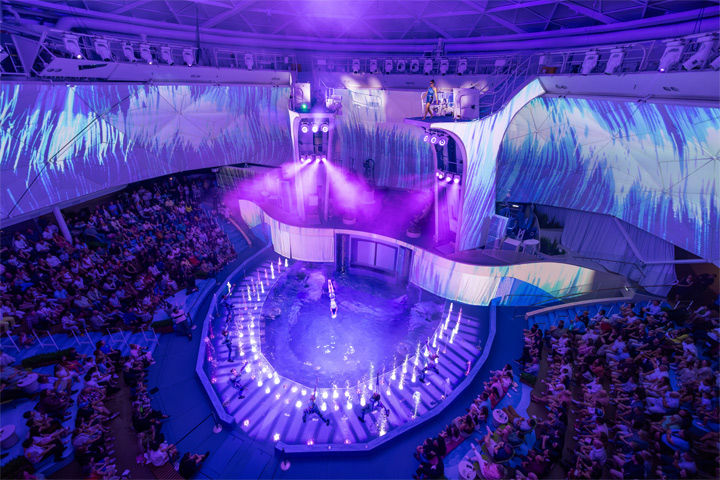
Aquatheater
- Art Gallery
- Bars/Lounges
- Beauty Salon
- Blow Dry Bar (To Dry For)
- Casino
- Children's Indoor Play Area
- Children's Outdoor Play Area
- Concierge Desk
- Conference Center
- Crown’s Edge (aerial adventure)
- Disco/Nightclub
- Dry Cleaning/Laundry Service
- Duty-Free Shops/Boutiques
- Educational Programs
- Elevators
- Escape Room
- Fitness Center
- Fitness Classes
- Full-Service Spa
- Game Arcade
- Guest Lecturers
- Ice Skating
- Infirmary/Medical Center
- Miniature Golf
- Movies
- Organized Age-Specific Activities
- Pool - Adults Only
- Pool - Children's
- Pool - Outdoor
- Retail Shopping
- Rock-Climbing Wall
- Sauna/Steam Room
- Spa Services/Massage
- Sports Facilities
- Spotlight Karaoke
- Suite Neighborhood
- Surfing
- Teen Center or Disco
- Teen Programs
- Theaters/Show Lounge
- Water Park
- Water Slide
- Wedding/Vow Renewal
- Whirlpool/Jacuzzi
Activities & Services (available for an extra fee)
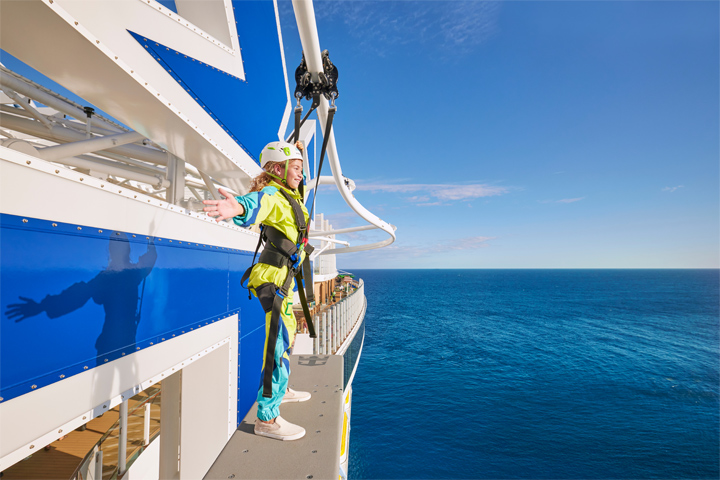
Crown's Edge
- Babysitting
Dining
Main Dining
Main Dining
Main Dining Rooms: Share your favorite moments of the day over your favorite meal in the Dining Room. Each night onboard brings a delectably different three-course theme to taste your way around the world together — with rotating flavors from Jamaica to Jaipur and signature Royal Caribbean® recipes loved by all. Expand your palate with dishes like buttery escargot or fill up on familiar faves like spaghetti Bolognese. Or, dress up any evening with options like Maine lobster tail and filet mignon.
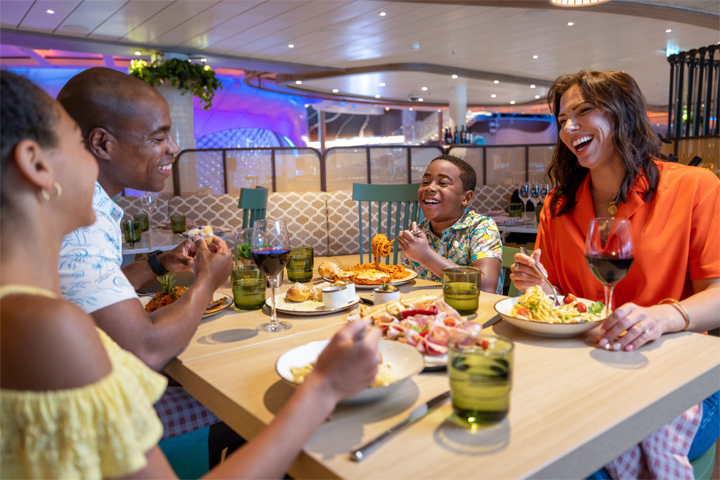
Specialty Dining
Specialty Dining
Giovanni's℠ Italian Kitchen & Wine Bar: Sunday supper is served every day at the new Giovanni's Italian Kitchen & Wine Bar. The menu highlights old world classics, including veal meatballs in sauce like they make in Sardinia and pappardelle served with rich radicchio cream. Save room for one of the hand-tossed pizzas delivered straight from the oven, and ask a sommelier on staff to suggest the perfect pairing from a wine list that ranges from Sangiovese to Super Tuscan.
Izumi Hibachi & Sushi℠: With fresh sushi selections and tempting teppanyaki prepared tableside, Izumi Hibachi & Sushi continues to dial up the Asian-inspired dining experience onboard. For the first time ever, the feast goes al fresco in the open-air Central Park®. Share bites from an extensive menu of maki and delight in the showmanship of an expert chef working right at your table. Sushi artists craft complex rolls and hibachi masters put on a high-energy spectacle of sharp knives — and sharper wit — that will have you laughing all night long. If you're on the go, the premier Izumi in the Park℠ window has a selection of signature rolls, nigiri, and Japanese sweets to enjoy anytime and anywhere.
Basecamp℠: Right in the middle of all the Thrill Island action, Basecamp is your family's headquarters to refuel between adventures. Choose from a variety of complimentary snacks like soft pretzel bites with cheese sauce, or splurge on next-level noshes like crispy shrimp bao buns. Tee up a round of drinks before putting around the mini-golf course. And with so many ways to fuel up between waterpark splashdowns, consider this your home base for bites you won't want to share.
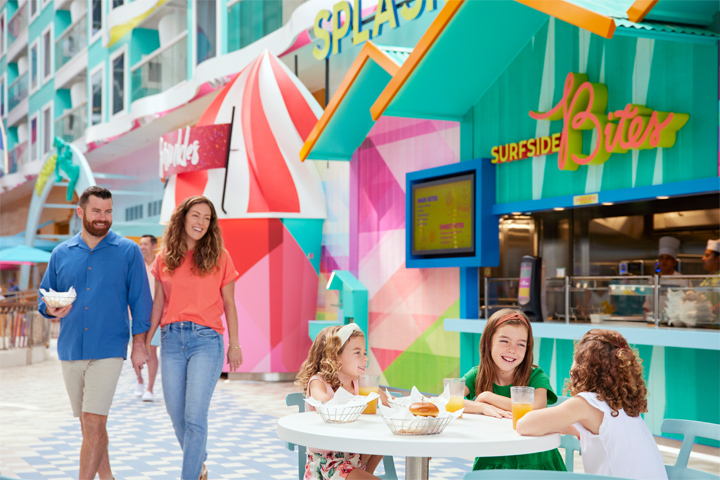
Casual Dining
Casual Dining
Surfside Bites℠: With tasty twists to pique new interests, Surfside Bites is your quick stop for sweet and salty noshes to refuel on the run. Snack on popcorn chicken and hot dogs before even drying off from Splashaway Bay℠. Power up after Playscape℠ fun with a burger and a side of mac and cheese. Treat the top scorer from the Arcade to chocolate chip cookies and cinnamon-sugar donut holes. And round out your time on the carousel with the neighborhood's very own Sprinkles putting its twist on vanilla, chocolate and strawberry soft serve.
Staterooms
- Interior (Category: V4)

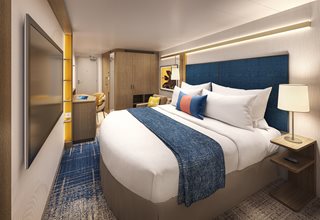
Category: V4
- Our most budget-friendly option A cozy and comfortable retreat
- Perfect for long naps after an adventure-filled day
Room Amenities
Beds- One Royal King bed (can convert into two twin-size beds)
Size
- Stateroom: 156 sq.ft
Living Spaces
- Room with bed and vanity
Bathrooms
- Full bathroom
- Shower with bench
Included in this room
- Dedicated stateroom attendant
- Daily cleaning service
- Exclusive bedding collection
- Stateroom climate control
- Ample closet and storage space
- In-room HD-TV
- In-room safe for valuables
- Hair dryer
- Deluxe toiletries: shampoo, conditioner, and body wash
- Central Park Interior (Category: U5)
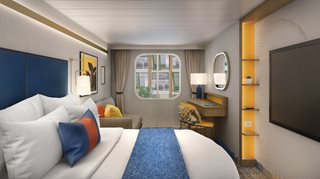
Category: U5
- Guarantee - Inside (Category: ZI)
Category: ZI
This category can be booked for a special rate, guaranteed to you. Please note that the category is not associated at the time of booking with a specific stateroom, deck, bedding configuration or other particular settings. The assignment of an actual cabin will be performed during your check-in. The cabin can be anywhere on the ship.
- Spacious Interior (Category: R4)
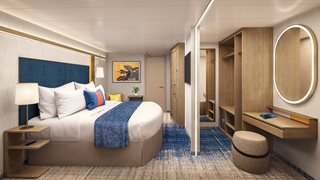
Category: R4
- Enjoy an interior stateroom with more space, at a great value
Room Amenities
Beds- One Royal King bed (can convert into two twin-size beds)
- One single sofa bed in staterooms with up to 3 guests
- One double sofa bed in staterooms with up to 4 guests
Size
- Stateroom: 178 sq.ft
Living Spaces
- Room with bed and vanity
Bathrooms
- Full bathroom
- Shower with bench
Included in this room
- Dedicated stateroom attendant
- Daily cleaning service
- Exclusive bedding collection
- Stateroom climate control
- Ample closet and storage space
- In-room HD-TV
- In-room safe for valuables
- Hair dryer
- Deluxe toiletries: shampoo, conditioner, and body wash
- Interior Plus (Category: Q2)
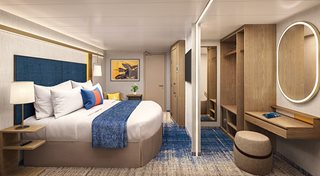
Category: Q2
- Enjoy a deluxe closet and dressing area
- There's no such thing as overpacking in these staterooms
Room Amenities
Beds- One Royal King bed (can convert into two twin-size beds)
Size
- Stateroom: 157 sq.ft
Living Spaces
- Room with bed
- Walk in closet with vanity
- Lounge chair with ottoman
Bathrooms
- Full bathroom
- Shower with bench
Included in this room
- Dedicated stateroom attendant
- Daily cleaning service
- Exclusive bedding collection
- Stateroom climate control
- Ample closet and storage space
- In-room HD-TV
- In-room safe for valuables
- Hair dryer
- Deluxe toiletries: shampoo, conditioner, and body wash
- Spacious Interior (Category: R3)
Category: R3
- Enjoy an interior stateroom with more space, at a great value
Room Amenities
Beds- One Royal King bed (can convert into two twin-size beds)
- One single sofa bed in staterooms with up to 3 guests
- One double sofa bed in staterooms with up to 4 guests
Size
- Stateroom: 178 sq.ft
Living Spaces
- Room with bed and vanity
Bathrooms
- Full bathroom
- Shower with bench
Included in this room
- Dedicated stateroom attendant
- Daily cleaning service
- Exclusive bedding collection
- Stateroom climate control
- Ample closet and storage space
- In-room HD-TV
- In-room safe for valuables
- Hair dryer
- Deluxe toiletries: shampoo, conditioner, and body wash
- Surfside Family Interior (Category: T5)
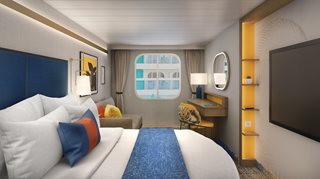
Category: T5
- Panoramic Ocean View (Category: L5)
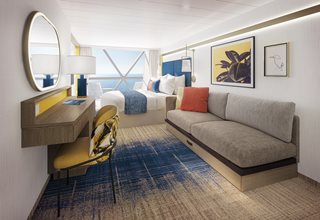
Category: L5
- Floor-to-ceiling in-stateroom window
- Soak in 180-degree ocean views
- Plenty of natural light
Occupancy: Up to 3 guestsRoom Amenities
Beds- One Royal King bed (can convert into two twin-size beds)
- One single sofa bed
Size
- Stateroom: 258 sq.ft
Living Spaces
- Room with bed, vanity and seating area with sofa
- Panoramic seating area
Bathrooms
- Full bathroom
- Shower with bench
Included in this room
- Dedicated stateroom attendant
- Daily cleaning service
- Exclusive bedding collection
- Stateroom climate control
- Ample closet and storage space
- In-room HD-TV
- In-room safe for valuables
- Hair dryer
- Deluxe toiletries: shampoo, conditioner, and body wash
- Ocean View (Category: N1)
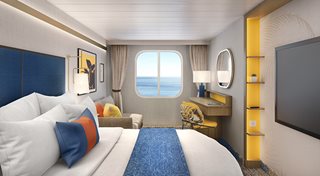
Category: N1
- Budget-friendly with a view of the ocean
- Your very own in-stateroom window
- Great for families with small children
Occupancy: Up to 4 guestsRoom Amenities
Beds- One Royal King bed (can convert into two twin-size beds)
- One single sofa bed in staterooms with up to 3 guests
- One double sofa bed in staterooms with up to 4 guests
Size
- Stateroom: 160 - 187 sq.ft
Living Spaces
- Room with bed, vanity and seating area with sofa
Bathrooms
- Full bathroom
- Shower with bench
Included in this room
- Dedicated stateroom attendant
- Daily cleaning service
- Exclusive bedding collection
- Stateroom climate control
- Ample closet and storage space
- In-room HD-TV
- In-room safe for valuables
- Hair dryer
- Deluxe toiletries: shampoo, conditioner, and body wash
- Ocean View (Category: N4)
Category: N4
- Budget-friendly with a view of the ocean
- Your very own in-stateroom window
- Great for families with small children
Occupancy: Up to 4 guestsRoom Amenities
Beds- One Royal King bed (can convert into two twin-size beds)
- One single sofa bed in staterooms with up to 3 guests
- One double sofa bed in staterooms with up to 4 guests
Size
- Stateroom: 160 - 187 sq.ft
Living Spaces
- Room with bed, vanity and seating area with sofa
Bathrooms
- Full bathroom
- Shower with bench
Included in this room
- Dedicated stateroom attendant
- Daily cleaning service
- Exclusive bedding collection
- Stateroom climate control
- Ample closet and storage space
- In-room HD-TV
- In-room safe for valuables
- Hair dryer
- Deluxe toiletries: shampoo, conditioner, and body wash
- Guarantee - Oceanview (Category: YO)
Category: YO
This category can be booked for a special rate, guaranteed to you. Please note that the category is not associated at the time of booking with a specific stateroom, deck, bedding configuration or other particular settings. The assignment of an actual cabin will be performed during your check-in. The cabin can be anywhere on the ship.
- Ocean View (Category: N5)
Category: N5
- Budget-friendly with a view of the ocean
- Your very own in-stateroom window
- Great for families with small children
Occupancy: Up to 4 guestsRoom Amenities
Beds- One Royal King bed (can convert into two twin-size beds)
- One single sofa bed in staterooms with up to 3 guests
- One double sofa bed in staterooms with up to 4 guests
Size
- Stateroom: 160 - 187 sq.ft
Living Spaces
- Room with bed, vanity and seating area with sofa
Bathrooms
- Full bathroom
- Shower with bench
Included in this room
- Dedicated stateroom attendant
- Daily cleaning service
- Exclusive bedding collection
- Stateroom climate control
- Ample closet and storage space
- In-room HD-TV
- In-room safe for valuables
- Hair dryer
- Deluxe toiletries: shampoo, conditioner, and body wash
- Family Infinite Ocean View Balcony (Category: IB)
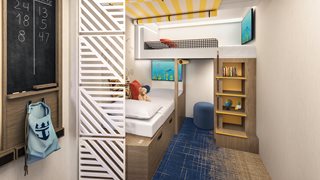
Category: IB
- Transform your living space into an extended oceanside escape at the press of a button
- Plus a separate hideaway bunk alcove
- Great for larger families
Occupancy: Up to 6 guestsRoom Amenities
Beds- One Royal King bed (can convert into two twin-size beds)
- One double sofa bed
- Bunk bed with 2 twin beds
Size
- Total Stateroom: 285 sq.ft (includes 50 sq.ft convertible balcony)
Living Spaces
- Room with bed, vanity and seating area with sofa
- Convertible balcony
- Room with bunk bed
Bathrooms
- Split bathroom with compartment for toilet and sink
- Shower
- Sink
Included in this room
- Dedicated stateroom attendant
- Daily cleaning service
- Exclusive bedding collection
- Stateroom climate control
- Ample closet and storage space
- In-room HD-TV
- In-room safe for valuables
- Hair dryer
- Deluxe toiletries: shampoo, conditioner, and body wash
- Infinite Central Park View Balcony (Category: IF)
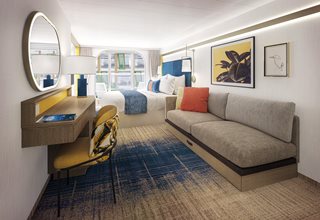
Category: IF
- Enjoy extra space and an expanded living area
- Becomes a balcony overlooking Central Park at the push of a button
Occupancy: Up to 4 guestsRoom Amenities
Beds- One Royal King bed (can convert into two twin-size beds)
- One single sofa bed in staterooms with up to 3 guests
- One double sofa bed in staterooms with up to 4 guests
Size
- Total Stateroom: 250 sq.ft (includes 50 sq.ft convertible balcony)
Living Spaces
- Room with bed, vanity and seating area with sofa
- Convertible balcony
Bathrooms
- Full bathroom
- Shower with bench
Included in this room
- Dedicated stateroom attendant
- Daily cleaning service
- Exclusive bedding collection
- Stateroom climate control
- Ample closet and storage space
- In-room HD-TV
- In-room safe for valuables
- Hair dryer
- Deluxe toiletries: shampoo, conditioner, and body wash
- Connecting Ocean View Balcony (Category: CB)
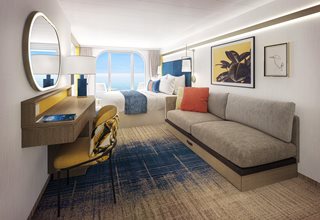
Category: CB
- Balcony stateroom that connects to the room next door via a private foyer
- Get "double" the ocean views and space by booking both
Occupancy: Up to 4 guestsRoom Amenities
Beds- One Royal King bed (can convert into two twin-size beds)
- One single sofa bed in staterooms with up to 3 guests
- One double sofa bed in staterooms with up to 4 guests
Size
- Stateroom: 204 sq.ft
- Balcony: 50 sq.ft
Living Spaces
- Room with bed, vanity, and sitting area with sofa
Bathrooms
- Full bathroom
- Shower with bench
Included in this room
- Dedicated stateroom attendant
- Daily cleaning service
- Exclusive bedding collection
- Stateroom climate control
- Ample closet and storage space
- In-room HD-TV
- In-room safe for valuables
- Hair dryer
- Deluxe toiletries: shampoo, conditioner, and body wash
- Ocean View Balcony (Category: D5)
Category: D5
- Our standard balcony stateroom
- Pristine views of the ocean
- Private balcony with chairs
Occupancy: Up to 4 guestsRoom Amenities
Beds- One Royal King bed (can convert into two twin-size beds)
- One single sofa bed in staterooms with up to 3 guests
- One double sofa bed in staterooms with up to 4 guests
Size
- Stateroom: 204 sq.ft
- Balcony: 50 - 70 sq.ft
Living Spaces
- Room with bed, vanity, and sitting area with sofa
Bathrooms
- Full bathroom
- Shower with bench
Included in this room
- Dedicated stateroom attendant
- Daily cleaning service
- Exclusive bedding collection
- Stateroom climate control
- Ample closet and storage space
- In-room HD-TV
- In-room safe for valuables
- Hair dryer
- Deluxe toiletries: shampoo, conditioner, and body wash
- Infinite Ocean View Balcony (Category: I3)
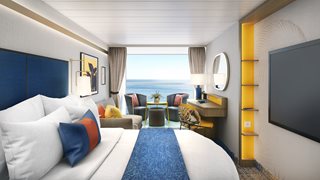
Category: I3
- Enjoy an expanded living area that becomes an oceanfront balcony at the push of a button
- Extra space and incredible views
Occupancy: Up to 4 guestsRoom Amenities
Beds- One Royal King bed (can convert into two twin-size beds)
- One single sofa bed in staterooms with up to 3 guests
- One double sofa bed in staterooms with up to 4 guests
Size
- Total Stateroom: 250 sq.ft (includes 50 sq.ft convertible balcony)
Living Spaces
- Room with bed, vanity and seating area with sofa and convertible balcony
Bathrooms
- Full bathroom
- Shower with bench
Included in this room
- Dedicated stateroom attendant
- Daily cleaning service
- Exclusive bedding collection
- Stateroom climate control
- Ample closet and storage space
- In-room HD-TV
- In-room safe for valuables
- Hair dryer
- Deluxe toiletries: shampoo, conditioner, and body wash
- Guarantee - Ocean View Balcony Stateroom (Category: XB)
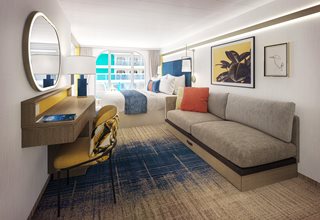
Category: XB
This category can be booked for a special rate, guaranteed to you. Please note that the category is not associated at the time of booking with a specific stateroom, deck, bedding configuration or other particular settings. The assignment of an actual cabin will be performed during your check-in. The cabin can be anywhere on the ship.
- Central Park View Balcony (Category: F1)
Category: F1
- Budget-friendly balcony stateroom
- Private balcony with views of Central Park®
- Perfect for nature lovers
Occupancy: Up to 4 guestsRoom Amenities
Beds- One Royal King bed (can convert into two twin-size beds)
- One single sofa bed in staterooms with up to 3 guests
- One double sofa bed in staterooms with up to 4 guests
Size
- Stateroom: 196 sq.ft
- Balcony: 50 sq.ft
Living Spaces
- Room with bed, vanity, and sitting area with sofa
Bathrooms
- Full bathroom
- Shower with bench
Included in this room
- Dedicated stateroom attendant
- Daily cleaning service
- Exclusive bedding collection
- Stateroom climate control
- Ample closet and storage space
- In-room HD-TV
- In-room safe for valuables
- Hair dryer
- Deluxe toiletries: shampoo, conditioner, and body wash
- Surfside Family View Balcony (Category: H3)
Category: H3
- Budget-friendly balcony stateroom
- Private balcony overlooking Surfside
- Perfect for people-watching
Occupancy: Up to 4 guestsRoom Amenities
Beds- One Royal King bed (can convert into two twin-size beds)
- One single sofa bed in staterooms with up to 3 guests
- One double sofa bed in staterooms with up to 4 guests
Size
- Stateroom: 196 sq.ft
- Balcony: 50 sq.ft
Living Spaces
- Room with bed, vanity, and sitting area with sofa
Bathrooms
- Full bathroom
- Shower with bench
Included in this room
- Dedicated stateroom attendant
- Daily cleaning service
- Exclusive bedding collection
- Stateroom climate control
- Ample closet and storage space
- In-room HD-TV
- In-room safe for valuables
- Hair dryer
- Deluxe toiletries: shampoo, conditioner, and body wash
- Ocean View Balcony (Category: D2)
Category: D2
- Our standard balcony stateroom
- Pristine views of the ocean
- Private balcony with chairs
Occupancy: Up to 4 guestsRoom Amenities
Beds- One Royal King bed (can convert into two twin-size beds)
- One single sofa bed in staterooms with up to 3 guests
- One double sofa bed in staterooms with up to 4 guests
Size
- Stateroom: 204 sq.ft
- Balcony: 50 - 70 sq.ft
Living Spaces
- Room with bed, vanity, and sitting area with sofa
Bathrooms
- Full bathroom
- Shower with bench
Included in this room
- Dedicated stateroom attendant
- Daily cleaning service
- Exclusive bedding collection
- Stateroom climate control
- Ample closet and storage space
- In-room HD-TV
- In-room safe for valuables
- Hair dryer
- Deluxe toiletries: shampoo, conditioner, and body wash
- Ocean View Balcony (Category: D1)
Category: D1
- Our standard balcony stateroom
- Pristine views of the ocean
- Private balcony with chairs
Occupancy: Up to 4 guestsRoom Amenities
Beds- One Royal King bed (can convert into two twin-size beds)
- One single sofa bed in staterooms with up to 3 guests
- One double sofa bed in staterooms with up to 4 guests
Size
- Stateroom: 204 sq.ft
- Balcony: 50 - 70 sq.ft
Living Spaces
- Room with bed, vanity, and sitting area with sofa
Bathrooms
- Full bathroom
- Shower with bench
Included in this room
- Dedicated stateroom attendant
- Daily cleaning service
- Exclusive bedding collection
- Stateroom climate control
- Ample closet and storage space
- In-room HD-TV
- In-room safe for valuables
- Hair dryer
- Deluxe toiletries: shampoo, conditioner, and body wash
- Surfside Family View Balcony (Category: H5)
Category: H5
- Budget-friendly balcony stateroom
- Private balcony overlooking Surfside
- Perfect for people-watching
Occupancy: Up to 4 guestsRoom Amenities
Beds- One Royal King bed (can convert into two twin-size beds)
- One single sofa bed in staterooms with up to 3 guests
- One double sofa bed in staterooms with up to 4 guests
Size
- Stateroom: 196 sq.ft
- Balcony: 50 sq.ft
Living Spaces
- Room with bed, vanity, and sitting area with sofa
Bathrooms
- Full bathroom
- Shower with bench
Included in this room
- Dedicated stateroom attendant
- Daily cleaning service
- Exclusive bedding collection
- Stateroom climate control
- Ample closet and storage space
- In-room HD-TV
- In-room safe for valuables
- Hair dryer
- Deluxe toiletries: shampoo, conditioner, and body wash
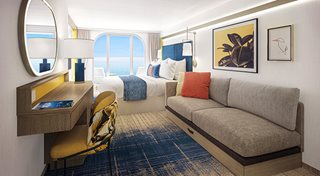
- Ocean View Large Balcony (Category: C3)
Category: C3
- Larger than standard balcony
- Private balcony with chairs
- Extra square footage to relax on your balcony
Occupancy: Up to 4 guestsRoom Amenities
Beds- One Royal King bed (can convert into two twin-size beds)
- One single sofa bed in staterooms with up to 3 guests
- One double sofa bed in staterooms with up to 4 guests
Size
- Stateroom: 204 sq.ft
- Balcony: 65 - 80 sq.ft
Living Spaces
- Room with bed, vanity, and sitting area with sofa
Bathrooms
- Full bathroom
- Shower with bench
Included in this room
- Dedicated stateroom attendant
- Daily cleaning service
- Exclusive bedding collection
- Stateroom climate control
- Ample closet and storage space
- In-room HD-TV
- In-room safe for valuables
- Hair dryer
- Deluxe toiletries: shampoo, conditioner, and body wash
- Ocean View Balcony (Category: D3)
Category: D3
- Our standard balcony stateroom
- Pristine views of the ocean
- Private balcony with chairs
Occupancy: Up to 4 guestsRoom Amenities
Beds- One Royal King bed (can convert into two twin-size beds)
- One single sofa bed in staterooms with up to 3 guests
- One double sofa bed in staterooms with up to 4 guests
Size
- Stateroom: 204 sq.ft
- Balcony: 50 - 70 sq.ft
Living Spaces
- Room with bed, vanity, and sitting area with sofa
Bathrooms
- Full bathroom
- Shower with bench
Included in this room
- Dedicated stateroom attendant
- Daily cleaning service
- Exclusive bedding collection
- Stateroom climate control
- Ample closet and storage space
- In-room HD-TV
- In-room safe for valuables
- Hair dryer
- Deluxe toiletries: shampoo, conditioner, and body wash
- Central Park View Balcony (Category: F5)
Category: F5
- Budget-friendly balcony stateroom
- Private balcony with views of Central Park®
- Perfect for nature lovers
Occupancy: Up to 4 guestsRoom Amenities
Beds- One Royal King bed (can convert into two twin-size beds)
- One single sofa bed in staterooms with up to 3 guests
- One double sofa bed in staterooms with up to 4 guests
Size
- Stateroom: 196 sq.ft
- Balcony: 50 sq.ft
Living Spaces
- Room with bed, vanity, and sitting area with sofa
Bathrooms
- Full bathroom
- Shower with bench
Included in this room
- Dedicated stateroom attendant
- Daily cleaning service
- Exclusive bedding collection
- Stateroom climate control
- Ample closet and storage space
- In-room HD-TV
- In-room safe for valuables
- Hair dryer
- Deluxe toiletries: shampoo, conditioner, and body wash
- Infinite Ocean View Balcony (Category: I1)
Category: I1
- Enjoy an expanded living area that becomes an oceanfront balcony at the push of a button
- Extra space and incredible views
Occupancy: Up to 4 guestsRoom Amenities
Beds- One Royal King bed (can convert into two twin-size beds)
- One single sofa bed in staterooms with up to 3 guests
- One double sofa bed in staterooms with up to 4 guests
Size
- Total Stateroom: 250 sq.ft (includes 50 sq.ft convertible balcony)
Living Spaces
- Room with bed, vanity and seating area with sofa and convertible balcony
Bathrooms
- Full bathroom
- Shower with bench
Included in this room
- Dedicated stateroom attendant
- Daily cleaning service
- Exclusive bedding collection
- Stateroom climate control
- Ample closet and storage space
- In-room HD-TV
- In-room safe for valuables
- Hair dryer
- Deluxe toiletries: shampoo, conditioner, and body wash
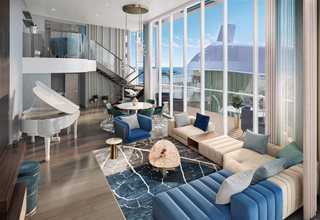
- Royal Loft (Category: RL)
Category: RL
- Expansive two-floor suite with ample space for everyone
- Most luxurious suite in the
- Royal Caribbean fleet
- Star Class amenities
Occupancy: Up to 6 guestsRoom Amenities
Beds- One King-size bed with Matermoll Summer Mattress One Royal King bed (can convert into two twin-size beds)
- One double sofa bed
Size
- Stateroom: 2,088 sq.ft (inclusive of the opening)
- Stateroom: 1,482 sq.ft (excluding the opening)
- Balcony (main level): 705 sq.ft
Living Spaces
- Open living and dining room area with wet bar on main level
- Large private balcony with dining area, whirlpool, and bar
- Master bedroom on second level
- Retreat area
- Dressing area
- Piano
Bathrooms
- Bathroom on main level
- Master bathroom with tub, shower, two sinks and toilet compartment with sink (3 sinks total) on second level
Star Class Exclusives
- Exclusive Access to the Suite Sun Deck
- Exclusive Access to Royal Genie Service
- All-Day Access to Coastal Kitchen
- Complimentary Specialty Restaurants
- Complimentary Ultimate Beverage Package (for guests 21 years or older)
- Complimentary Royal Replenish Package (for guests under 21 years old)
- Complimentary Gratuities
- Complimentary VOOM
- And more
Included in this room
- Dedicated stateroom attendant
- Daily cleaning service
- Exclusive bedding collection
- Stateroom climate control
- Ample closet and storage space
- In-room HD-TV
- In-room safe for valuables
- Hair dryer
- Deluxe toiletries: shampoo, conditioner, and body wash
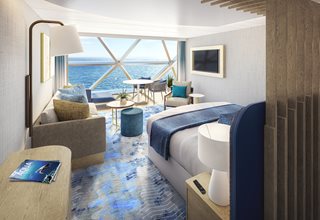
- Panoramic Suite (Category: VP)
Category: VP
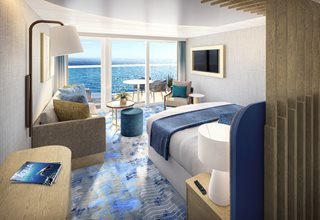
- Guarantee - Suite (Category: WS)
Category: WS
This category can be booked for a special rate, guaranteed to you. Please note that the category is not associated at the time of booking with a specific stateroom, deck, bedding configuration or other particular settings. The assignment of an actual cabin will be performed during your check-in. The cabin can be anywhere on the ship.
- Sunset Corner Suite (Category: SN)
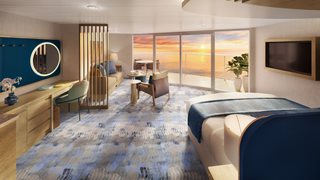
Category: SN
- Views of endless blue are all around
- Enjoy a massive wraparound balcony
- Sky Class amenities
Occupancy: Up to 4 guestsRoom Amenities
Beds- One King bed
- One double sofa bed
Size
- Stateroom: 380 - 440 sq.ft
- Balcony: 304 - 323 sq.ft
Living Spaces
- Bedroom area
- Living room with seating
- Private balcony with seating area and private dining
Bathrooms
- One bathroom with tub with niche and two sinks
Sky Class Exclusives
- Exclusive Access to the Suite Sun Deck
- Concierge Service
- All-Day Access to Coastal Kitchen
- Specialty Bottled Water (upon arrival)
- Complimentary VOOM
- Priority Boarding and Departure
- And more
Included in this room
- Dedicated stateroom attendant
- Daily cleaning service
- Exclusive bedding collection
- Stateroom climate control
- Ample closet and storage space
- In-room HD-TV
- In-room safe for valuables
- Hair dryer
- Deluxe toiletries: shampoo, conditioner, and body wash
- Infinite Grand Suite (Category: IG)
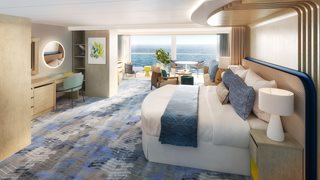
Category: IG
- Spacious suite with living room
- Living area that becomes an oceanfront balcony at the push of a button
- Sky Class amenities
Occupancy: Up to 4 guestsRoom Amenities
Beds- One Royal King bed (can convert into two twin-size beds)
- One double sofa bed
Size
- Total Stateroom: 431 sq.ft (includes 102. ft. convertible balcony)
Living Spaces
- Bedroom area
- Living room with seating
- Convertible balcony with seating area and private dining
Bathrooms
- Split bath with one compartment containing a tub and sink and the other with a sink and toilet
Sky Class Exclusives
- Exclusive Access to the Suite Sun Deck
- Concierge Service
- All-Day Access to Coastal Kitchen
- Specialty Bottled Water (upon arrival)
- Complimentary VOOM
- Priority Boarding and Departure
- And more
Included in this room
- Dedicated stateroom attendant
- Daily cleaning service
- Exclusive bedding collection
- Stateroom climate control
- Ample closet and storage space
- In-room HD-TV
- In-room safe for valuables
- Hair dryer
- Deluxe toiletries: shampoo, conditioner, and body wash
- Sunset Suite (Category: SS)
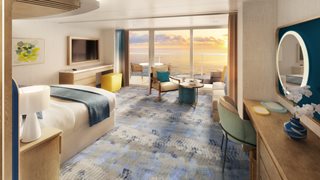
Category: SS
- Ample space for lounging with views of endless blue
- Aft-facing views from your private balcony at the back of the ship
- Sky Class amenities
Occupancy: Up to 4 guestsRoom Amenities
Beds- One Royal King bed (can convert into two twin-size beds)
- One double sofa bed
Size
- Stateroom: 383 sq.ft
- Balcony: 112 sq.ft
Living Spaces
- Bedroom area
- Living room with seating
- Private balcony with seating area and private dining
Bathrooms
- One bathroom with tub with niche and two sinks
Sky Class Exclusives
- Exclusive Access to the Suite Sun Deck
- Concierge Service
- All-Day Access to Coastal Kitchen
- Specialty Bottled Water (upon arrival)
- Complimentary VOOM
- Priority Boarding and Departure
- And more
Included in this room
- Dedicated stateroom attendant
- Daily cleaning service
- Exclusive bedding collection
- Stateroom climate control
- Ample closet and storage space
- In-room HD-TV
- In-room safe for valuables
- Hair dryer
- Deluxe toiletries: shampoo, conditioner, and body wash
- Surfside Family Suite (Category: SF)
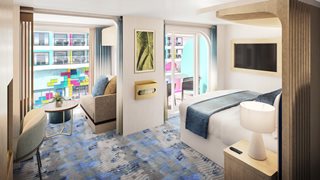
Category: SF
- Separate cozy kids' room, and a convenient split bathroom
- Views overlooking the Surfside neighborhood
- Sea Class amenities
Occupancy: Sleeps 2 adults and 2 kidsRoom Amenities
Beds- One Royal King bed (can convert into two twin-size beds)
- One sofa bed that converts to a bed ideal for 2 kids
Size
- Stateroom: 269 sq.ft
- Balcony: 53 sq.ft
Living Spaces
- Bedroom area
- Kids nook with sofa
- Private balcony
Bathrooms
- Split bath with one compartment containing a shower (with niche and shelves) and sink and the other with a sink and toilet
Sea Class Exclusives
- Dinner at Coastal Kitchen, based on availability (reservations required; beverages are not included)
- Priority Boarding
- Royal Caribbean Classic Bathrobes for use onboard
- Luxury bathroom amenities
Included in this room
- Dedicated stateroom attendant
- Daily cleaning service
- Exclusive bedding collection
- Stateroom climate control
- Ample closet and storage space
- In-room HD-TV
- In-room safe for valuables
- Hair dryer
- Deluxe toiletries: shampoo, conditioner, and body wash
- Ultimate Family Townhouse (Category: UL)
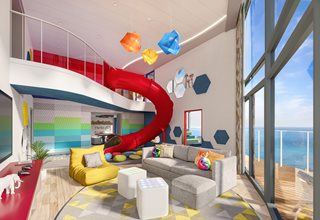
Category: UL
- Sprawling adventure-filled pad with three levels of incredible surprises
- Race down the in-suite slide
- Star Class amenities
Occupancy: Up to 8 guestsRoom Amenities
Beds- One King-size bed with Matermoll Summer Mattress Loft area with bunk bed Kid's room with two twin beds
- One double sofa bed
Size
- Stateroom: 1,772 sq.ft
- Balcony (main level): 410 sq.ft
- Balcony (second level): 90 sq.ft
- Backyard: 251 sq.ft
Living Spaces
- Master bedroom and kids bedroom on second level
- Lower level backyard with access to Surfside neighborhood
- Kid's nook underneath the staircase
- Ping pong table and lounge seating with wet bar
- Open living area with entry vestibule with panoramic views to Surfside
- Dining room with interactive gaming table
Bathrooms
- Full bathroom with shower and sink on the main level
- Master bathroom with two sinks and two shower heads
- Kids bathroom with two sinks and a tub
Star Class Exclusives
- Exclusive Access to the Suite Sun Deck
- Exclusive Access to Royal Genie Service
- All-Day Access to Coastal Kitchen
- Complimentary Specialty Restaurants
- Complimentary Ultimate Beverage Package (for guests 21 years or older)
- Complimentary Royal Replenish Package (for guests under 21 years old)
- Complimentary Gratuities
- Complimentary VOOM
- And more
Included in this room
- Dedicated stateroom attendant
- Daily cleaning service
- Exclusive bedding collection
- Stateroom climate control
- Ample closet and storage space
- In-room HD-TV
- In-room safe for valuables
- Hair dryer
- Deluxe toiletries: shampoo, conditioner, and body wash
- Junior Suite (Category: JS)
Category: JS
- Our standard suite for luxury on a budget
- Private balcony with two chairs
- Sea Class amenities
Occupancy: Up to 4 guestsRoom Amenities
Beds- One Royal King bed (can convert into two twin-size beds)
- One double sofa bed
Size
- Stateroom: 322 sq.ft
- Balcony: 80 sq.ft
Living Spaces
- Bedroom area
- Seating area with sofa
- Private balcony
Bathrooms
- Full bathroom with tub
Sea Class Exclusives
- Dinner at Coastal Kitchen, based on availability (Reservations are required. Beverages are not included.)
- Priority Boarding
- Royal Caribbean Classic Bathrobes for Use Onboard
- Luxury Bathroom Amenities
Included in this room
- Dedicated stateroom attendant
- Daily cleaning service
- Exclusive bedding collection
- Stateroom climate control
- Ample closet and storage space
- In-room HD-TV
- In-room safe for valuables
- Hair dryer
- Deluxe toiletries: shampoo, conditioner, and body wash
- Grand Suite (Category: GS)
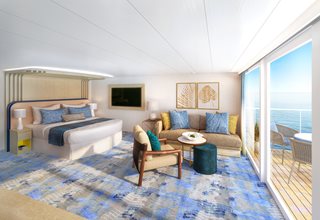
Category: GS
- Ample space, including a living room and full bathroom with a tub
- "Grandest" suite in the fleet
- Sky Class amenities
Occupancy: Up to 4 guestsRoom Amenities
Beds- One Royal King bed (can convert into two twin-size beds)
- One double sofa bed
Size
- Stateroom: 431 sq.ft
- Balcony: 108 sq.ft
Living Spaces
- Bedroom area
- Living room with seating
- Private balcony with seating area and private dining
Bathrooms
- One bathroom with tub with niche and two sinks
Sky Class Exclusives
- Exclusive Access to the Suite Sun Deck
- Concierge Service
- All-Day Access to Coastal Kitchen
- Specialty Bottled Water (upon arrival)
- Complimentary VOOM
- Priority Boarding and Departure
- And more
Included in this room
- Dedicated stateroom attendant
- Daily cleaning service
- Exclusive bedding collection
- Stateroom climate control
- Ample closet and storage space
- In-room HD-TV
- In-room safe for valuables
- Hair dryer
- Deluxe toiletries: shampoo, conditioner, and body wash
- Sky Junior Suite (Category: JY)
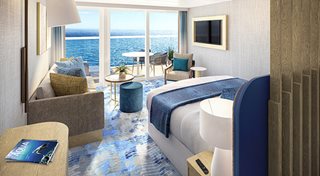
Category: JY
- Our standard Junior Suite with extra perks
- Private balcony with chairs
- Sky Class amenities (Does not include the complimentary VOOM internet package.)
Occupancy: Up to 4 guestsRoom Amenities
Beds- One Royal King bed (can convert into two twin-size beds)
- One double sofa bed
Size
- Stateroom: 322 sq.ft
- Balcony: 80 sq.ft
Living Spaces
- Bedroom area
- Seating area with sofa
- Private balcony
Bathrooms
- Full bathroom with tub
Sky Class Exclusives
- Exclusive Access to the Suite Sun Deck
- Concierge Service
- All-Day Access to Coastal Kitchen
- Specialty Bottled Water (upon arrival)
- Priority Boarding and Departure
- And more
Included in this room
- Dedicated stateroom attendant
- Daily cleaning service
- Exclusive bedding collection
- Stateroom climate control
- Ample closet and storage space
- In-room HD-TV
- In-room safe for valuables
- Hair dryer
- Deluxe toiletries: shampoo, conditioner, and body wash
- Owner's Suite (Category: OS)
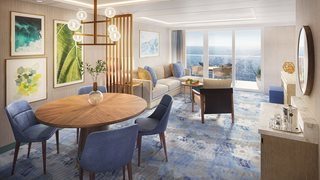
Category: OS
- Even bigger than our Grand Suites
- With extra square footage to use as you kick back and relax
- Sky Class amenities
Occupancy: Up to 4 guestsRoom Amenities
Beds- One Royal King bed (can convert into two twin-size beds)
- One double sofa bed
Size
- Stateroom: 658 sq.ft
- Balcony: 190 sq.ft
Living Spaces
- Bedroom area
- Living area with dining table and sitting area
- Private balcony with seating area and private dining
Bathrooms
- One bathroom with tub and shower and two sinks
Sky Class Exclusives
- Exclusive Access to the Suite Sun Deck
- Concierge Service
- All-Day Access to Coastal Kitchen
- Specialty Bottled Water (upon arrival)
- Complimentary VOOM
- Priority Boarding and Departure
- And more
Included in this room
- Dedicated stateroom attendant
- Daily cleaning service
- Exclusive bedding collection
- Stateroom climate control
- Ample closet and storage space
- In-room HD-TV
- In-room safe for valuables
- Hair dryer
- Deluxe toiletries: shampoo, conditioner, and body wash
- Icon Loft (Category: IL)
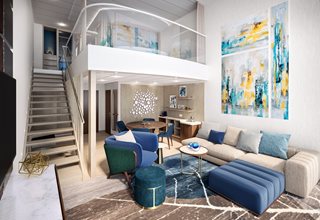
Category: IL
- Extra-large loft suite with spacious living area and balcony
- Upper-level master bedroom overlooks the living room
- Star Class amenities
Occupancy: Up to 4 guestsRoom Amenities
Beds- One Royal King bed
- One double sofa bed
Size
- Stateroom: 646 sq.ft
- Balcony: 151 - 183 sq.ft
Living Spaces
- Open living and dining room with dry bar on main level
- Master bedroom on second level
- Private balcony with dining area
- Seating bench under the stairs
- L-shape sofa
Bathrooms
- One bathroom with shower on main level
- Master bathroom with integrated bench and two shower heads on second level
Star Class Exclusives
- Exclusive Access to the Suite Sun Deck
- Exclusive Access to Royal Genie Service
- All-Day Access to Coastal Kitchen
- Complimentary Specialty Restaurants
- Complimentary Ultimate Beverage Package (for guests 21 years or older)
- Complimentary Royal Replenish Package (for guests under 21 years old)
- Complimentary Gratuities
- Complimentary VOOM
- And more
Included in this room
- Dedicated stateroom attendant
- Daily cleaning service
- Exclusive bedding collection
- Stateroom climate control
- Ample closet and storage space
- In-room HD-TV
- In-room safe for valuables
- Hair dryer
- Deluxe toiletries: shampoo, conditioner, and body wash
Deck Plan


| Symbol | Description |
|---|---|
 | Obstructed view |
 | Occupancy up to 3 |
 | Accessible stateroom |
 | Occupancy up to 4 |
 | Occupancy 5 and up |
| Obstructed view |
| Occupancy up to 3 |
| Accessible stateroom |
| Occupancy up to 4 |
| Occupancy 5 and up |
| Obstructed view |
| Occupancy up to 3 |
| Accessible stateroom |
| Occupancy up to 4 |
| Occupancy 5 and up |
Ship Facts
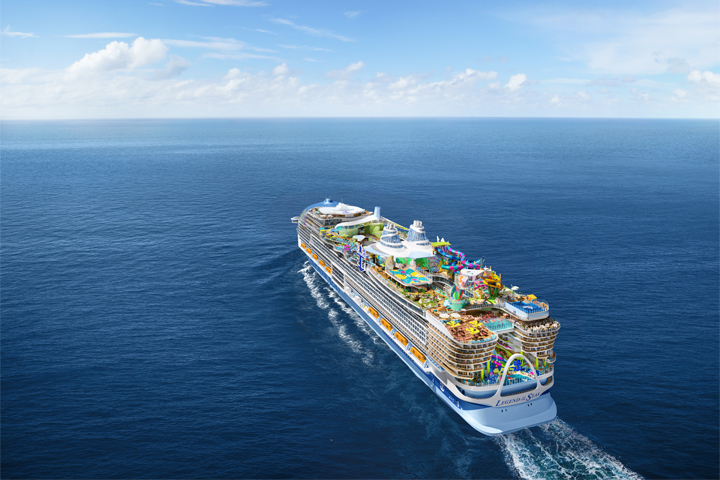
- Ship Name: Legend of the Seas
- Ship Name: Legend of the Seas
- Year Built: 2023
- Year Entered Present Fleet: 2025
- Ship Class: Icon
- Maximum Capacity: 7,600
- Number of Passenger Decks: 20
- Number of Crew: 2,400
- Officers' Nationality: International
- Tonnage (GRT): 250,000
- Capacity Based on Double Occupancy: 5,628
- Country of Registry: The Bahamas
- Total Staterooms: 2,814
- Crew/Hotel Staff Nationality: International
Costco Member Reviews
Available Dates and Prices
Available Dates and Prices not available at this time for this particular sailing. Please click here to enter Destination and Departure Month to see all available sailings.
Terms & Conditions
*Price shown is per person based on double occupancy and is valid for select stateroom categories only. Click on the Terms & Conditions link below for details.
†One Digital Costco Shop Card per room/stateroom, per stay. The exact amount of the Digital Costco Shop Card will be calculated during the booking process. The Digital Costco Shop Card promotion is nontransferable and may not be combined with any other promotion. A Digital Costco Shop Card will arrive by email approximately 10 days after the start of your cruise. Click on the Terms & Conditions link below for additional information.
Image is an artist's rendering.
Ship's registry: The Bahamas
Package ID: RCILEGEUR20261022
Digital Costco Shop Card
Book this cruise with Costco Travel and receive a Digital Costco Shop Card. The Digital Costco Shop Card is a convenient payment option in our warehouses and on Costco.com.